
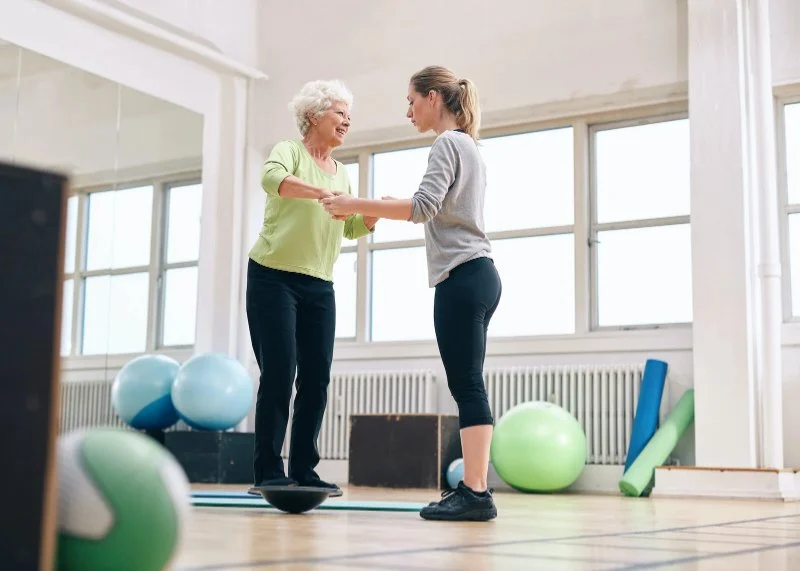
The Best Strength Exercises to Improve Balance and Reduce Fall Risk for Older Adults in Autumn
- 1- The Importance of Balance and Strength for Older Adults
- 2- Understanding Fall Risks for Older Adults in Autumn
- 3- The Best Strength Exercises for Balance
- 4- Exercise Tips for Older Adults to Improve Balance
- 5- A Case Study: Strength and Balance Improvement
- 6- The Role of Nutrition in Supporting Balance and Strength
- 7- Where to Find the Best Fitness Equipment for Balance Exercises
1- The Importance of Balance and Strength for Older Adults
For older adults, maintaining strong muscles and good balance is crucial for overall mobility and independence. As we age, our muscles naturally lose mass and our bones become more brittle. This can lead to decreased stability, making everyday activities like walking, climbing stairs, or simply standing up more difficult. It also increases the risk of falls, which are one of the leading causes of injury among seniors.
However, with the right strength and balance exercises, older adults can significantly reduce their risk of falling, improve their posture, and feel more confident in their physical abilities. Regular exercise tailored to these goals can make a world of difference in maintaining an active lifestyle, particularly as we enter the autumn months when outdoor activities might be limited.

HOTWORX - Scottsdale - Pima Crossing / hotworx scottsdale
ScottsdaleMaricopa CountyArizona
8660 E Shea Blvd #164, Scottsdale, AZ 85260, USA
2- Understanding Fall Risks for Older Adults in Autumn
Autumn brings cooler temperatures and slippery conditions that can increase the risk of falls, especially for older adults. The leaves that fall from trees can create wet, slippery surfaces, while shorter daylight hours reduce visibility for outdoor activities. Additionally, as we prepare for winter, seniors may become more sedentary, contributing to muscle weakness and reduced balance.
During this time of year, it’s important for older adults to focus on exercises that improve both strength and balance. By doing so, they can prevent falls and maintain their independence, even as the weather changes and outdoor conditions become more challenging.

3- The Best Strength Exercises for Balance
Strength exercises are essential for improving balance and reducing fall risk. Here are some of the most effective exercises for older adults:
- Chair Stand: This simple exercise strengthens the legs and core while improving stability. Sit on a sturdy chair, place your feet flat on the floor, and stand up slowly. Then, lower yourself back down without using your hands. Repeat for 10-15 reps.
- Heel-to-Toe Walk: This exercise challenges your balance by having you walk in a straight line, placing the heel of one foot directly in front of the toes of the other. This can be done in short intervals, about 10-20 steps at a time.
- Standing Leg Lifts: Stand behind a chair for support. Slowly lift one leg out to the side, hold for a few seconds, and then lower it. Repeat on the other leg. This strengthens the hips and improves overall balance.
- Wall Push-Ups: Wall push-ups are a great way to build upper body strength while enhancing stability. Stand facing a wall, place your hands on the wall, and slowly lower your body toward it before pushing back up. This helps strengthen the arms, shoulders, and core.
By incorporating these exercises into a routine, older adults can significantly improve their ability to stay steady on their feet, especially in challenging environments like those found during autumn.
4- Exercise Tips for Older Adults to Improve Balance
Here are some important tips for older adults to get the most out of their balance exercises:
- Start Slowly: If you're new to strength training, begin with gentle exercises and gradually increase intensity over time. Consistency is key to avoiding injury and building strength.
- Use Support When Needed: Always have a chair, wall, or other stable object nearby when performing balance exercises to prevent falls.
- Focus on Proper Form: Good posture and form are essential to preventing strain and injury. Engage your core and keep your movements controlled to improve the effectiveness of each exercise.
- Stretch Regularly: Stretching helps improve flexibility and joint mobility, which are vital for maintaining balance. Incorporate stretches for the hips, legs, and back into your routine.
Following these tips will not only help improve balance but also boost overall strength, enabling older adults to maintain independence and mobility as they age.
5- A Case Study: Strength and Balance Improvement
Let’s consider the case of Janet, a 72-year-old woman who struggled with balance issues after a fall two years ago. She began an 8-week strength training program that incorporated the exercises mentioned above. After just a few weeks, Janet noticed improvements in her ability to walk confidently, and she was no longer afraid of navigating uneven surfaces like sidewalks or grass.
Janet’s program focused on building strength in her legs, hips, and core, combined with balance exercises like heel-to-toe walking and standing leg lifts. After completing her program, Janet was able to resume activities she had avoided, such as gardening and walking in the park, all while reducing her fear of falling.
This case illustrates how consistent strength and balance exercises can have a profound impact on the quality of life for older adults. With the right approach, you too can experience similar improvements in balance and strength.
6- The Role of Nutrition in Supporting Balance and Strength
Nutrition plays an important role in maintaining strength and balance. Consuming a balanced diet that supports muscle health and bone density can significantly enhance the effectiveness of strength training exercises. Key nutrients to focus on include:
- Protein: Essential for muscle repair and growth. Include lean proteins like chicken, fish, eggs, and plant-based options like tofu and legumes.
- Calcium and Vitamin D: Crucial for bone strength. Dairy products, leafy greens, and fortified foods are excellent sources.
- Magnesium: Supports muscle function and helps prevent cramps. Foods like nuts, seeds, and whole grains are rich in magnesium.
By focusing on these nutrients, older adults can maximize the benefits of their strength exercises, improving both muscle strength and overall balance.
7- Where to Find the Best Fitness Equipment for Balance Exercises
If you’re looking for quality fitness equipment to enhance your balance and strength training, visit Hot Fitness. We offer a selection of resistance bands, balance boards, and other equipment designed to support older adults in their fitness journey. Whether you’re looking to enhance your balance routine or start a new strength program, Hot Fitness has the tools you need to succeed!



 Bungee Fitness Forever5.0 (132 reviews)
 Oviedo YMCA Family Center4.0 (285 reviews)
 Essential Pilates & Fitness4.0 (16 reviews)
 PXM Fitness Center4.0 (148 reviews)
 NJIT The Sandy & John Olson Fitness Center3.0 (3 reviews)
 Club Pilates4.0 (137 reviews)
 How to Build Core Strength That Improves Running Posture and Reduces Low-Back Pain
 The Complete Fall Program for Busy Parents: 30-Minute Workouts That Actually Work
 How to Build Resilience for Cold-Weather Endurance Events with Progressive Conditioning Blocks
 How to Train for a Tough, Windy Fall 10K: Pacing, Strength and Mental Tricks
 ACSM: Key Insights for Fitness Professionals and Enthusiasts
 The Ultimate Cardio Routine for Maximum Health Benefits