
- 1- Grip Training for Obstacle Courses
- 2- Effective Carry Training
- 3- Plyometric Progressions for Agility
- 4- Integrating Grip, Carry, and Plyometric Exercises
- 5- Conclusion
1. Grip Training for Obstacle Courses
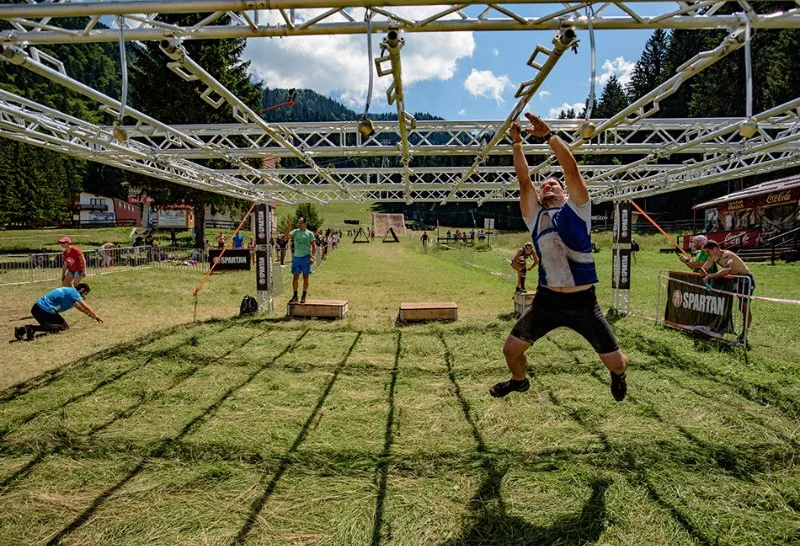
One of the most crucial aspects of preparing for a fall obstacle course is developing a strong grip. In many obstacle courses, your ability to hold onto bars, ropes, or uneven surfaces determines your success. Without proper grip strength, you might find yourself slipping or unable to complete certain obstacles.
To enhance your grip, start with basic exercises like dead hangs, farmer's carries, and kettlebell swings. These exercises simulate the demands placed on your hands during an obstacle course and target your forearms, which are key to building grip strength.
Another effective method is using hand grips or stress balls, which help strengthen your fingers and palms. Practice holding onto objects for extended periods and gradually increase the difficulty by adding weight or adjusting the angle of your body.

Mountainside Fitness Scottsdale Pavilions / mountainside fitness talking stick
ScottsdaleMaricopa CountyArizona
8929 E Talking Stick Wy, Scottsdale, AZ 85250, USA
2. Effective Carry Training
Carries are often an integral part of obstacle courses, requiring both strength and endurance. Training for carries involves lifting and transporting heavy objects over various distances and terrains. This builds core strength and stability, which is crucial for performing well in the race.
Start with simple exercises like the sandbag carry, where you lift a weighted object off the ground and carry it to a specific point. As you progress, try incorporating different types of carries like the farmer's carry or the overhead carry. These moves will challenge your stability and activate multiple muscle groups simultaneously.
It’s also important to train under fatigue to mimic the conditions of an actual race. To do this, incorporate carries into high-intensity interval training (HIIT) sessions to develop both strength and endurance under pressure.
LA Fitness / la fitness dobson warner
ChandlerMaricopa CountyArizona
3985 S Arizona Ave, Chandler, AZ 85248, USA
3. Plyometric Progressions for Agility
Plyometric exercises are essential for improving explosive power, agility, and speed – all of which are critical components of obstacle course races. These exercises help you improve your ability to jump, climb, and change directions quickly, mimicking the dynamic movements required during the race.
Start with basic plyometric exercises like squat jumps, box jumps, and bounding. These movements activate fast-twitch muscle fibers and improve your overall power output. As you progress, increase the intensity by incorporating more complex drills like single-leg hops or lateral jumps.
Plyometrics also play a role in improving your coordination and balance, which will help you navigate through obstacles that require precise footwork or quick decision-making.
4. Integrating Grip, Carry, and Plyometric Exercises
To truly excel at a fall obstacle course, it’s crucial to integrate grip, carry, and plyometric exercises into your training regimen. A balanced approach ensures that you develop the specific skills and strength needed to perform at your best.
One way to incorporate all these elements is by creating a circuit training routine. For example, combine a set of dead hangs for grip strength, followed by a sandbag carry, and finish with a series of box jumps. This combination will challenge your endurance while targeting various muscle groups in your body.
Consistency and progression are key. As your strength and conditioning improve, gradually increase the difficulty of each exercise. For instance, increase the duration of your grip exercises, add more weight to your carries, or perform more explosive jumps during your plyometric drills.
5. Conclusion
Training for a fall obstacle course is a multifaceted process that requires you to develop strength, endurance, agility, and mental toughness. By focusing on grip strength, carrying techniques, and plyometric progressions, you can prepare yourself to tackle any obstacle that comes your way.
Remember, each obstacle course is unique, so tailor your training to match the specific challenges you expect to encounter. And don’t forget to check out Hot Fitness for the best products, training equipment, and advice to take your performance to the next level!




 Monticello Gymnastics4.0 (6 reviews)
 HealthQuest Fitness & Wellness Center4.0 (250 reviews)
 Lauren Trippodo Fitness5.0 (22 reviews)
 Strength Center4.0 (8 reviews)
 YogaSix Royal Oak4.0 (133 reviews)
 24 Hour Fitness3.0 (369 reviews)
 How to Fit Quality Sessions Into a 3-Run-a-Week Training Plan for Fall Races
 How to Incorporate Weight Loss Into Your Day
 How to Build Sprint Speed for Short Races Using Strength and Hill Repeats This Fall
 Best Warm-Up and Mobility Drills for Hill Repeats and Tempo Runs in Cold Weather
 10 Mistakes to Avoid in Your Workout – Improve Performance & Prevent Injuries
 How to Incorporate Yoga Into Your Day | Hot Fitness