
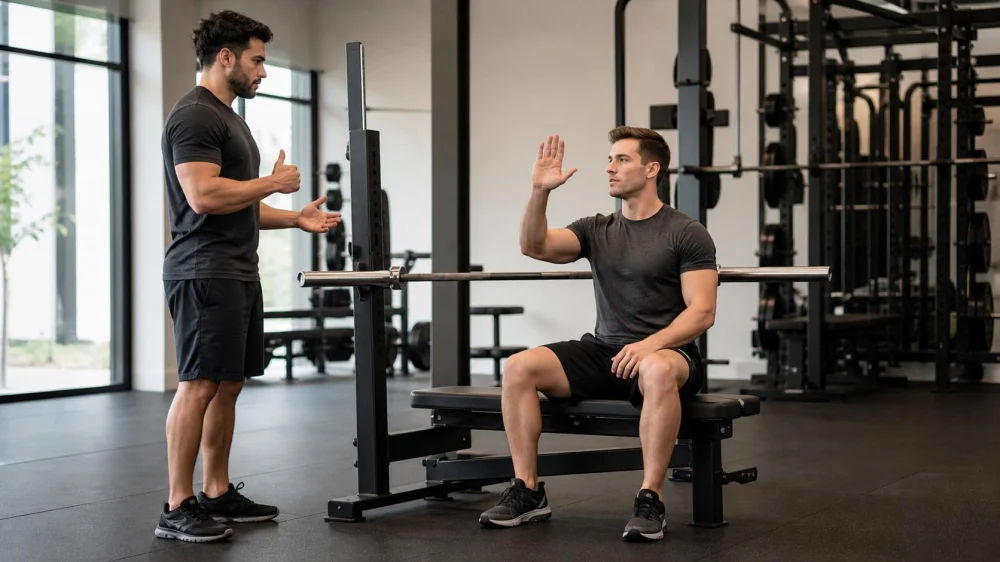
Gym Spotter Communication: Agree on Cues Before the Lift
On this page
Quick answer
Before a spotted lift, name the exercise, planned repetitions, rack or handoff method, help cue, stop cue, expected sticking point, and how the set ends. The lifter and spotter should inspect the equipment, remove distractions, and agree on roles before touching the weight. If either person is unsure about the technique or load, choose a safer setup or ask qualified staff.
Crunch Fitness - Crown Heights / gym crown heights
842 Lefferts Ave, Brooklyn, NY 11203, USA
Match the spotter to the lift
“Can you spot me?” is not a complete safety plan. Spotting position, hand placement, number of spotters, and available safety equipment vary by exercise. A bench press, squat, dumbbell press, and machine do not use one universal method.
Choose someone who understands the specific lift, can pay full attention, and can safely assist the expected load. A strength difference, height mismatch, unfamiliar rack, or very heavy attempt may require trained staff, multiple spotters, correctly set safeties, or a different exercise. Do not pressure a person to accept a spotting role.

Use a pre-set briefing
The lifter should state the planned load and repetitions, whether a lift-off is wanted, when the spotter takes control, and which words mean “help,” “rack,” and “stop.” Agree whether the spotter should avoid touching the bar unless the cue is given or movement clearly cannot continue safely.
Clarify unusual techniques before the set. Do not invent cues while the lifter is straining. If music, headphones, language, hearing, or the room makes verbal cues unreliable, use simple rehearsed visual or movement cues and reduce complexity.
The spotter may ask about prior warm-up sets and whether pain, dizziness, unusual fatigue, or equipment concerns are present. A spotter is not a substitute for medical clearance, instruction, or sensible load selection.
Check equipment and position
Inspect the bench, rack, bar, collars, plates, floor, and adjustment pins. Set rack hooks and safety supports for the lifter and exercise. Clear phones, bottles, loose plates, and other trip hazards from the working area. The spotter should have stable footing and an unobstructed path.
Rehearse the start and finish with an empty bar or light load when the pair has not worked together. The lifter should demonstrate grip and intended range; the spotter should demonstrate position and assistance path without interfering.
Communicate during the set
The spotter watches continuously and avoids conversation, filming, or looking across the room. Use only the agreed concise cues. Do not grab suddenly for ordinary slowing if the plan says the lifter retains control, but do not wait for a perfect word when there is an obvious immediate loss of control.
If assistance begins, coordinate the return to a stable rack or safe end position. Do not force extra repetitions after the stop cue. Afterward, note whether the load, cues, rack height, safety setting, or number of spotters should change.
Spotter checklist
- Specific exercise and load understood.
- Spotter capable and willing.
- Repetitions and stopping plan stated.
- Handoff, help, rack, and stop cues agreed.
- Rack, safeties, bench, collars, and floor checked.
- Stable position and clear path established.
- Distractions removed.
- Post-set adjustment discussed.
Limitations and warning signs
This article is general gym-safety information, not coaching or medical advice. Spotting methods vary by exercise, equipment, load, facility, and individual ability. Ask qualified staff for hands-on instruction. Stop the activity and seek appropriate help for injury, chest pain, fainting, severe shortness of breath, sudden weakness, confusion, or other alarming symptoms.
FAQ
Should a spotter touch the bar on every repetition?
Not automatically. Agree on when assistance begins and use an exercise-specific method taught by qualified staff.
Can one person spot every lift?
No. Some loads and exercises may need multiple trained spotters, safety equipment, or a different setup.
Should the spotter count repetitions?
Only if the pair agrees. Attention to control, cues, and the safe finish is more important than an argument about the count.
What if the spotter seems unsure?
Pause the set. Ask staff, reduce the load, use appropriate safeties, or select another exercise.
Evidence notes
The American Council on Exercise's bench-press assessment protocol describes spotter responsibilities and different spotting arrangements. Its exercise library also demonstrates that spotter position is exercise-specific. These examples are not a universal method for every lift.
Next steps
Before your next spotted set, rehearse one sentence: exercise, repetitions, handoff, help cue, and rack cue. Test the equipment with a light load and ask gym staff to review the setup if either person is unfamiliar.


 Stay Fit Studio5.0 (16 reviews)
 PRO 24 Gym4.0 (10 reviews)
 Noble Performance0.0 (0 reviews)
 Orangetheory Fitness5.0 (18 reviews)
 Perfect Fitness4.0 (55 reviews)
 Yoga Fitness Center4.0 (5 reviews)
 How to Do HIIT Safely and Effectively: Essential Tips for Maximum Results
 How to Improve Cardiovascular Fitness for Beginners: A Step-by-Step Guide
 The Best Glute-Focused Leg Day Routine: Sculpt Your Glutes with These Effective Exercises
 The Best Weekly Workout Schedule for Beginners
 How to Train Your Glutes for Strength and Shape: Complete Guide
 The Best Practices for Tracking Training Stress and Avoiding Burnout During Heavy Autumn Training