
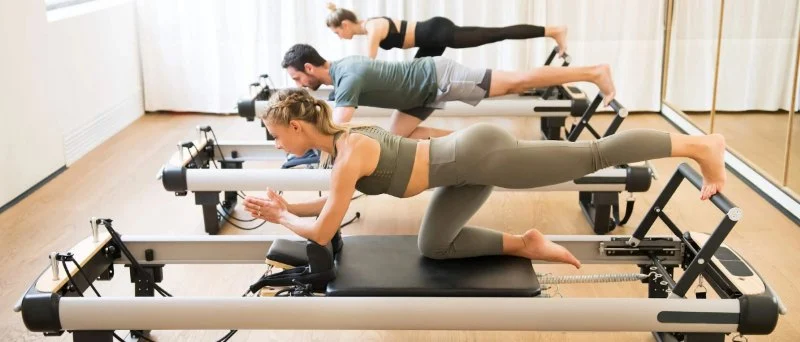
- 1-Why Pilates Ball Workouts Are Effective
- 2-Building Core Strength with Pilates Ball Exercises
- 3-Enhancing Stability and Balance with a Pilates Ball
- 4-Beginner-Friendly Pilates Ball Exercises
- 5-Taking Your Pilates Ball Workouts to the Next Level
- 6-Tips for Maximizing Your Pilates Ball Workout
1. Why Pilates Ball Workouts Are Effective
Pilates ball workouts have become a popular and accessible way to improve both strength and stability, and the best part is that you don’t need a reformer machine to reap the benefits. A Pilates ball, also known as a stability ball or exercise ball, is an excellent tool for engaging multiple muscle groups at once. Its unstable surface challenges your body to recruit stabilizing muscles, which helps enhance balance, coordination, and overall strength. Whether you're at home or in a studio, these workouts can be adapted to suit your fitness level and goals.

Real Pilates - Upper East Side / real pilates ues
New YorkNew York CountyNew York
1226 Lexington Ave, New York, NY 10028, USA
2. Building Core Strength with Pilates Ball Exercises
Your core is the foundation of your strength and stability. Pilates ball exercises are particularly effective for targeting the muscles of your core, including your abs, lower back, and obliques. By incorporating a Pilates ball into your workout, you engage these muscles more effectively than with traditional floor exercises.
The Hot Yoga Spot / hot yoga saratoga springs
Saratoga SpringsSaratoga CountyNew York
75 Woodlawn Ave, Saratoga Springs, NY 12866, USA
2.1 Pilates Ball Roll-Outs
This simple yet effective move targets your core and improves stability. Start by kneeling on the floor with your hands on the Pilates ball. Slowly roll the ball forward as far as you can while keeping your back straight. Then, roll it back toward you, using your core to control the movement. This exercise activates the abs, lower back, and even the arms, helping to build a strong and stable core.
2.2 Ball Passes
Ball passes engage the entire core and help improve coordination. Begin by lying on your back with the ball between your hands and feet. Lift your legs and arms off the ground, bringing your hands and feet together to pass the ball between them. Slowly lower back down and repeat. This exercise strengthens the core while improving stability and flexibility.
3. Enhancing Stability and Balance with a Pilates Ball
The instability of the Pilates ball forces your body to engage smaller stabilizing muscles, which are often neglected during other forms of exercise. This leads to improved balance and overall stability, which is crucial for injury prevention and overall functional fitness.
3.1 Squats on the Ball
Adding a Pilates ball to your squats can increase the challenge and enhance stability. Stand with the ball against a wall, placing it between your lower back and the wall. Lower yourself into a squat position while keeping the ball in place. The instability of the ball requires you to activate your core and maintain your balance throughout the movement, making it a great exercise for strengthening both your legs and your core.
3.2 Bridge Pose on the Ball
The bridge pose on the ball is a fantastic way to work the glutes, hamstrings, and lower back while enhancing your stability. Begin by lying on your back with your feet on top of the ball and your knees bent. Lift your hips towards the ceiling to form a straight line from your shoulders to your knees. Hold for a moment before lowering your hips back to the ground. The ball's instability engages your core and challenges your balance, helping you improve overall stability.
4. Beginner-Friendly Pilates Ball Exercises
If you're new to Pilates or using a Pilates ball, start with exercises that are simple and easy to perform. As your strength and stability improve, you can progress to more challenging movements. Here are some beginner-friendly exercises to get started:
4.1 Wall Squats with Pilates Ball
This is a great introduction to using the Pilates ball for strengthening your legs and core. Place the ball between your lower back and a wall. Slowly bend your knees to lower into a squat position, ensuring that your knees don’t extend past your toes. The ball will help support your back and provide a stable surface for balance.
4.2 Seated Ball Balance
Sitting on the Pilates ball helps improve your balance and engages your core. Simply sit on the ball with your feet flat on the floor and your spine aligned. Try lifting one foot off the ground at a time, holding it for a few seconds, and then switching sides. This is a simple way to improve balance and activate your stabilizing muscles.
5. Taking Your Pilates Ball Workouts to the Next Level
Once you’re comfortable with basic exercises, you can progress to more advanced Pilates ball workouts that further challenge your strength, stability, and flexibility.
5.1 Plank with Ball Roll-In
The plank is a staple in Pilates and fitness routines for building core strength. Adding a ball roll-in to your plank increases the challenge. Start in a plank position with your feet resting on the Pilates ball. Slowly roll the ball towards your hands by bending your knees and drawing them in. Roll the ball back out and repeat. This exercise engages the core, shoulders, and legs, helping to build overall strength and stability.
5.2 Pilates Ball Push-Ups
Performing push-ups with your hands or feet on the Pilates ball increases the intensity of the exercise. Start in a push-up position with either your feet or hands on the ball, depending on your ability. This adds an extra element of instability, forcing your body to engage additional stabilizing muscles to maintain balance throughout the push-up.
6. Tips for Maximizing Your Pilates Ball Workout
To get the most out of your Pilates ball workout, follow these tips:
6.1 Maintain Proper Posture
Maintaining proper posture is key to preventing injury and ensuring that you target the correct muscles. Always keep your spine aligned and engage your core muscles throughout each movement.
6.2 Focus on Controlled Movements
Rather than rushing through exercises, focus on performing each movement slowly and with control. This will help you engage the muscles more effectively and reduce the risk of injury.
6.3 Consistency is Key
As with any fitness routine, consistency is crucial. Incorporate Pilates ball exercises into your weekly routine, aiming for at least two to three sessions per week. Over time, you’ll notice improvements in your strength, stability, and overall fitness.
For the best Pilates balls, fitness equipment, and expert advice, check out Hot Fitness to find the perfect products and services that will help you achieve your fitness goals.


 Talo Yoga5.0 (26 reviews)
 Susan Barber Yoga5.0 (9 reviews)
 UCLA CORE Training4.0 (7 reviews)
 Rich Valley Gymnastics4.0 (16 reviews)
 Body Chemistry Studio - Pilates & Gyrotonic5.0 (14 reviews)
 Infinity Fitness4.0 (49 reviews)
 The Best Mobility and Warm-Up Flows to Reduce Muscle Soreness After Long Weekend Runs
 10 Mistakes to Avoid in Strength Training
 Beginner’s Guide to Weight Loss: Tips, Plans, and Strategies for Success
 How to Build a Weekly Template That Prioritizes Recovery During Heavy Training Blocks
 The Best Strategies to Avoid Burnout When Training Intensely During Shorter Fall Days
 Why Recovery Tools (Percussion Guns, Compression Boots) Matter More in 2025