
- Understanding-Why-Push-Ups-Are-One-of-the-Best-Bodyweight-Exercises - Benefits for strength and endurance
- How-to-Do-Push-Ups-Correctly-for-Maximum-Results - Proper technique and form breakdown
- Common-Push-Up-Mistakes-That-Reduce-Results - Errors that hurt progress and increase injury risk
- Best-Push-Up-Variations-for-Different-Fitness-Levels - Modifications and advanced options
- How-to-Build-a-Push-Up-Routine-That-Actually-Works - Smart programming for better gains
- Nutrition-Recovery-and-Consistency-for-Better-Performance - Habits that improve long-term results
Understanding Why Push-Ups Are One of the Best Bodyweight Exercises
Push-ups have been a foundational exercise in fitness programs for decades, and for good reason. They require no expensive equipment, can be performed almost anywhere, and deliver impressive benefits when done correctly. Yet despite their simplicity, many people perform push-ups with poor form, limiting their progress and increasing the risk of shoulder, wrist, or lower back discomfort.
Learning How to Do Push-Ups Correctly for Maximum Results is not just about increasing repetition numbers. Proper push-up technique improves chest development, shoulder stability, tricep strength, core control, and overall athletic performance. Whether someone is a beginner struggling to complete a few repetitions or an experienced athlete looking to refine movement quality, mastering push-ups can dramatically improve upper-body fitness.
One reason push-ups remain so popular is their versatility. They can be adapted for nearly every fitness level, from wall push-ups for beginners to explosive plyometric variations for advanced athletes.

How to Do Push-Ups Correctly for Maximum Results
1. Start With Proper Hand Placement
Hand position has a major impact on push-up performance and comfort. A common mistake is placing the hands too wide or too narrow, which can strain the shoulders and wrists.
For a standard push-up:
1. Place your hands slightly wider than shoulder-width apart.
2. Keep fingers spread naturally for stability.
3. Position wrists directly under or slightly outside the shoulders.
4. Press firmly through the palms to create upper-body tension.
Correct hand placement helps distribute force evenly while improving chest and tricep activation.

Deep Creek Fitness / deep creek fitness
24586 Garrett Hwy, McHenry, MD 21541, USA
2. Maintain a Straight Body Line
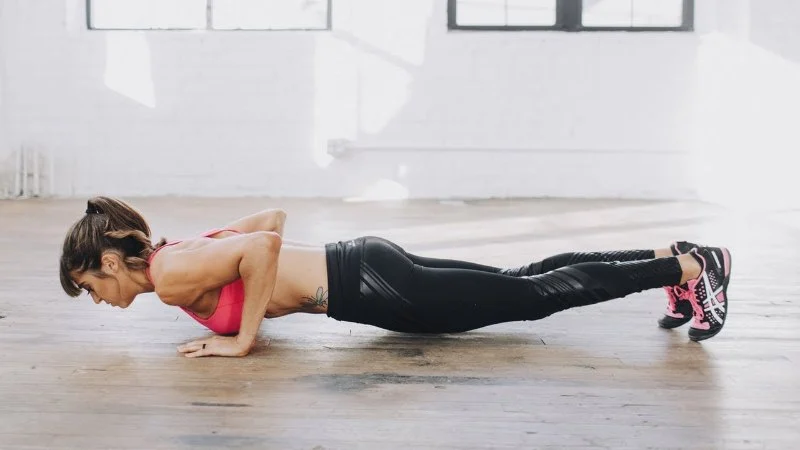
One of the biggest differences between effective push-ups and ineffective ones is total-body positioning. The body should move as one connected unit from head to heels.
Many beginners allow the hips to sag or rise too high during repetitions. This reduces core engagement and places unnecessary stress on the lower back.
To maintain proper alignment:
1. Tighten the core muscles.
2. Squeeze the glutes lightly.
3. Keep the neck neutral rather than looking excessively forward.
4. Avoid arching the lower back.
Think of the push-up as a moving plank rather than only an arm exercise.
3. Lower the Body With Control
The lowering phase, often called the eccentric portion, plays a major role in muscle development. Rushing through repetitions limits tension and reduces strength gains.
Slowly lower the chest toward the floor while keeping elbows at roughly a 45-degree angle from the torso.
This elbow angle protects the shoulders better than flaring the arms directly outward.
4. Reach Proper Depth
Partial repetitions are extremely common, especially when fatigue sets in. However, limited range of motion reduces muscle activation.
For most people, the chest should come close to the floor without collapsing or losing spinal alignment.
Proper depth improves chest recruitment while increasing overall movement quality.
5. Push Back Up Powerfully
During the upward phase, press through the palms while maintaining full-body tension.
Avoid letting the hips rise faster than the shoulders. The entire body should move upward together in a controlled motion.
At the top:
1. Fully extend the arms without aggressively locking the elbows.
2. Maintain core tension.
3. Prepare immediately for the next repetition.
Why Good Push-Up Form Matters More Than High Repetition Counts
Many people focus heavily on repetition numbers rather than movement quality. Social media fitness challenges often encourage fast, sloppy push-ups simply to increase totals.
In reality, ten properly executed push-ups often produce better strength and muscle-building results than thirty rushed repetitions with poor technique.
Good form improves:
1. Chest activation
2. Tricep engagement
3. Shoulder stability
4. Core strength
5. Joint protection
6. Long-term performance
Proper technique also helps prevent overuse injuries that commonly occur with repetitive poor mechanics.
Common Push-Up Mistakes That Reduce Results
1. Flaring the Elbows Too Wide
One of the most common push-up mistakes involves elbows pointing straight outward. This position places excessive stress on the shoulders and reduces force efficiency.
Keeping elbows at a moderate angle improves both safety and strength output.
2. Sagging Hips and Poor Core Engagement
A collapsing midsection often signals weak core control or fatigue. Once posture breaks down, the movement becomes less effective.
Improving plank strength can help reinforce proper push-up positioning.
3. Performing Half Repetitions
Incomplete repetitions reduce muscle tension and limit strength development.
Using proper depth consistently creates better results over time.
4. Rushing Through the Exercise
Fast repetitions may increase heart rate, but they often sacrifice movement quality.
Controlled tempo improves muscle activation and reduces unnecessary strain.
5. Ignoring Wrist Discomfort
Wrist pain during push-ups can result from poor hand positioning, tight wrists, or inadequate mobility.
Some athletes benefit from push-up handles or dumbbells to maintain more neutral wrist alignment.
Best Push-Up Variations for Different Fitness Levels
Beginner Push-Up Variations
Wall Push-Ups
Wall push-ups provide a gentle starting point for beginners developing upper-body strength.
They reduce bodyweight resistance while teaching proper alignment.
Incline Push-Ups
Using a bench, countertop, or elevated surface decreases difficulty while reinforcing good mechanics.
Incline variations are especially useful for building confidence and consistency.
Knee Push-Ups
Knee push-ups remain controversial in some fitness circles, but they can still help beginners develop pressing strength when performed correctly.
The key is maintaining full-body alignment from head to knees rather than collapsing at the hips.
Intermediate Push-Up Variations
Standard Push-Ups
The classic push-up remains one of the most effective bodyweight exercises when executed with proper form and control.
Tempo Push-Ups
Slowing the lowering phase increases time under tension and challenges muscle endurance.
For example:
1. Lower for three seconds.
2. Pause briefly at the bottom.
3. Press upward powerfully.
Close-Grip Push-Ups
Bringing the hands slightly closer together increases tricep involvement while demanding stronger core stability.
Advanced Push-Up Variations
Decline Push-Ups
Elevating the feet shifts more emphasis onto the upper chest and shoulders.
This variation also increases overall resistance.
Plyometric Push-Ups
Explosive push-ups develop upper-body power and athletic performance.
However, they should only be attempted after mastering standard technique.
Archer Push-Ups
Archer push-ups increase unilateral loading and build significant pressing strength.
They also prepare athletes for advanced calisthenics progressions.
How to Build a Push-Up Routine That Actually Works
Focus on Consistency Rather Than Exhaustion
Many people make the mistake of performing maximum repetitions every workout. While effort matters, constantly training to failure can slow recovery and limit long-term progress.
A balanced approach typically works better.
Example Beginner Push-Up Routine
1. Incline push-ups: 3 sets of 10 repetitions
2. Knee push-ups: 3 sets of 8 repetitions
3. Plank holds: 3 rounds of 30 seconds
4. Rest 60 seconds between sets
Example Intermediate Push-Up Routine
1. Standard push-ups: 4 sets of 12 repetitions
2. Tempo push-ups: 3 sets of 8 repetitions
3. Close-grip push-ups: 3 sets of 10 repetitions
4. Core exercises between sets
Progressive Overload Still Matters
Bodyweight training becomes more effective when difficulty increases gradually over time.
Progress can come from:
1. More repetitions
2. Additional sets
3. Slower tempo
4. Harder variations
5. Reduced rest periods
Nutrition, Recovery, and Consistency for Better Performance
Muscle Recovery Depends on Nutrition
Push-ups challenge multiple muscle groups, and proper nutrition supports recovery and growth.
Protein intake is especially important for muscle repair and performance adaptation.
Sleep Influences Strength Gains
Recovery does not happen only during workouts. Sleep quality strongly affects muscle repair, hormone balance, and overall athletic performance.
Many athletes underestimate how much recovery impacts progress.
Mobility Training Improves Push-Up Quality
Tight shoulders, stiff wrists, and poor thoracic mobility can negatively affect push-up mechanics.
Adding mobility exercises often improves both comfort and performance.
Real-World Examples of Push-Up Transformation
A college student preparing for military fitness testing shared online that he initially struggled to complete even five proper push-ups. Instead of chasing high repetition counts immediately, he focused on controlled incline variations and core strength for several weeks.
By improving technique first, he eventually increased his performance to over forty high-quality push-ups without shoulder discomfort.
Another fitness enthusiast documented her progress after switching from rushed repetitions to slower tempo push-ups. Although her total repetitions temporarily decreased, she noticed significantly better chest and tricep development within two months.
These stories highlight an important truth: movement quality often creates better long-term results than ego-driven training.
Why Push-Ups Remain One of the Most Effective Exercises
Despite the constant release of new fitness equipment and workout trends, push-ups continue to deliver measurable strength and conditioning benefits because they train multiple muscle groups simultaneously while improving coordination and stability.
They also scale easily across different fitness levels, making them one of the most accessible exercises available.
For people looking to improve upper-body strength without expensive gym memberships, mastering push-ups can provide tremendous value.
Where to Find Better Fitness Guidance and Training Ideas
As more people embrace bodyweight fitness and home workouts, reliable training information has become increasingly valuable. Platforms like Hot Fitness offer practical workout ideas, beginner-friendly fitness strategies, recovery guidance, and strength-building resources designed for real-world training goals.
Having access to structured fitness education often helps people train more effectively while avoiding common mistakes that slow progress.
Building Long-Term Strength Through Proper Push-Up Technique
Understanding How to Do Push-Ups Correctly for Maximum Results is about much more than simply performing repetitions. Proper technique improves muscle activation, protects the joints, strengthens the core, and builds long-term athletic performance.
The most successful athletes and fitness enthusiasts are not always the ones doing the highest number of push-ups. Often, they are the individuals who focus on movement quality, consistency, recovery, and gradual progression.
By mastering the fundamentals and approaching training with patience, nearly anyone can use push-ups to develop impressive upper-body strength, endurance, and confidence over time.




 CrossFit Main Line - Plymouth Meeting5.0 (93 reviews)
 F45 Training Center City, Philadelphia5.0 (220 reviews)
 Club Pilates0.0 (0 reviews)
 Speakeasy Fitness - North Hills4.0 (79 reviews)
 L.O.V.E Yoga Studio5.0 (55 reviews)
 FitCity4.0 (50 reviews)
 How to Use Short, Hard Over-Under Intervals to Build Toughness and Speed for 10K Races
 How to Build a Sustainable Running Routine That Survives Shorter Fall Days and Busy Schedules
 Science-Backed Tips for Improving Your Muscle Gain: Proven Strategies
 How to Train for Back-to-Back Races: Recovery, Nutrition and Smart Volume Management
 Short on Time? The 20-Minute Full-Body Strength Session for Fall Mornings
 Best Exercises to Reduce Back Fat and Build a Stronger Back