
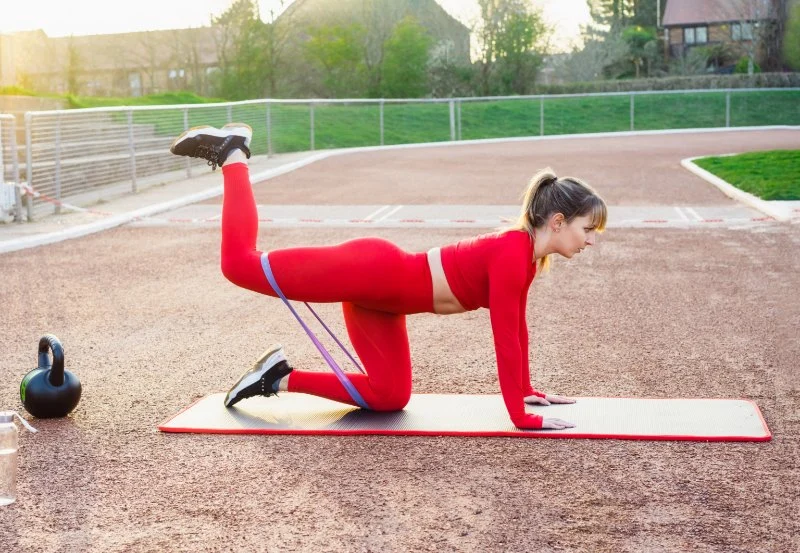
1. Why Stronger Glutes Are Essential for Runners
When it comes to running, the glutes play a pivotal role in performance and injury prevention. The glutes, or gluteal muscles, are responsible for driving your legs during the running stride, stabilizing your pelvis, and maintaining proper posture. A strong set of glutes not only helps you run faster but also reduces the risk of injuries like IT band syndrome, hip pain, and lower back discomfort.
Whether you’re aiming to increase your running speed, power, or endurance, building stronger glutes is a game-changer. In this article, we’ll dive into the importance of glute strength for runners and provide you with a comprehensive guide on exercises to strengthen these crucial muscles.
2. How Glutes Impact Running Performance
Your glutes are one of the largest muscle groups in your body and play a major role in running efficiency. Here’s how they contribute to your overall performance:

Equinox Huntington Beach / equinox huntington
Huntington BeachOrange CountyCalifornia
21010 Pacific Coast Hwy, Huntington Beach, CA 92648, USA
2.1 Power and Speed
The glutes are the primary muscles responsible for propelling you forward while running. A stronger glute will help you produce more power during each stride, which translates to faster running speeds. Runners with strong glutes can generate more force with less effort, making them more efficient in their movements.
2.2 Stability and Injury Prevention
Strong glutes help stabilize your hips and pelvis during running, reducing the chances of compensatory movements that can lead to injuries. Weak glutes, on the other hand, often cause poor running mechanics, leading to imbalances and overuse of other muscles, which can result in injuries like shin splints, knee pain, and stress fractures.
3. Top Exercises for Strengthening Glutes
To build stronger glutes for running power, speed, and injury prevention, incorporating targeted exercises into your workout routine is key. Here are some of the most effective glute-strengthening exercises that runners should add to their training program:
3.1 Hip Thrusts
Hip thrusts are one of the most effective exercises for targeting the glutes. By driving your hips upward while your upper back rests on a bench, you fully engage your glute muscles. This movement mimics the powerful hip extension required in running and helps to build strength in your glutes and hamstrings.
How to do it: Sit on the ground with your upper back against a bench and a barbell resting across your hips. Plant your feet flat on the floor, then thrust your hips upward until your body forms a straight line from your shoulders to your knees. Lower back down and repeat for 3 sets of 10-15 reps.
3.2 Squats
Squats are a staple in any strength training routine, and they’re especially beneficial for runners. By squatting, you target the glutes, quads, and hamstrings, all of which are essential for running power and stability.
How to do it: Stand with your feet shoulder-width apart, keeping your chest up and your back straight. Lower your body as if you’re sitting back into a chair, keeping your knees aligned with your toes. Drive through your heels to return to the starting position. Perform 3 sets of 10-12 reps.
3.3 Lunges
Lunges are great for targeting the glutes, as well as the hip flexors and quads. They also help improve your balance and coordination, which are essential for maintaining good running form.
How to do it: Step forward with one leg, lowering your hips until both knees are bent at a 90-degree angle. Ensure that your front knee is directly above your ankle, and the back knee nearly touches the ground. Push off the front foot to return to the starting position. Repeat for 3 sets of 10 reps per leg.
3.4 Deadlifts
Deadlifts are an excellent exercise for targeting the posterior chain, including the glutes, hamstrings, and lower back. This movement helps runners develop the strength needed for proper hip extension, which is vital for pushing off the ground during each stride.
How to do it: Stand with your feet hip-width apart and a barbell in front of you. Bend at your hips and knees to grip the bar, keeping your back straight. Lift the bar by extending your hips and knees simultaneously, then lower it back down to the ground. Perform 3 sets of 8-10 reps.
4. Glute Activation for Runners
It’s essential not only to strengthen your glutes but also to activate them before running. Glute activation exercises prepare your muscles to fire properly during your run, improving your efficiency and reducing the risk of injury.
4.1 Glute Bridges
Glute bridges are a simple but effective way to activate the glutes before your run. They help you engage the glute muscles and prepare them for the demands of running.
How to do it: Lie on your back with your knees bent and feet flat on the floor. Push through your heels to lift your hips off the ground until your body forms a straight line from your shoulders to your knees. Hold at the top for a few seconds, then lower back down. Repeat for 2-3 sets of 10-15 reps.
5. How to Incorporate Glute Workouts into Your Training
To maximize your running performance and reduce the risk of injury, aim to incorporate glute-strengthening exercises into your routine 2-3 times per week. It's important to balance strength training with your running workouts to avoid overtraining.
Incorporate the exercises mentioned above into your training plan by alternating between strength workouts and running sessions. For example, you can do strength training on non-running days or after easy runs, ensuring your body has enough time to recover between intense workouts.
If you’re looking for the best equipment and resources to help with your glute training, visit Hot Fitness, where you can find high-quality strength training equipment, workout plans, and expert advice tailored to your fitness goals.



 Equinox Wisconsin Avenue4.0 (41 reviews)
 Push Fitness5.0 (3 reviews)
 Just Bee Yoga + Well-being5.0 (4 reviews)
 Mayweather Boxing Club4.0 (249 reviews)
 Live Long Pilates5.0 (7 reviews)
 Upcoming Wellness5.0 (15 reviews)
 How to Incorporate Yoga Into Your Day for a Healthier Life
 How to Use Progressive Overload Safely With Bodyweight Exercises This Autumn
 How to Incorporate Weight Loss Into Your Day – Practical Tips for Success
 10 Mistakes to Avoid in Workout for Better Results
 The Best At-Home Lower-Body Circuits to Improve Stamina and Power for Trail Running
 How to Incorporate Muscle Gain Into Your Day: A Simple Guide