
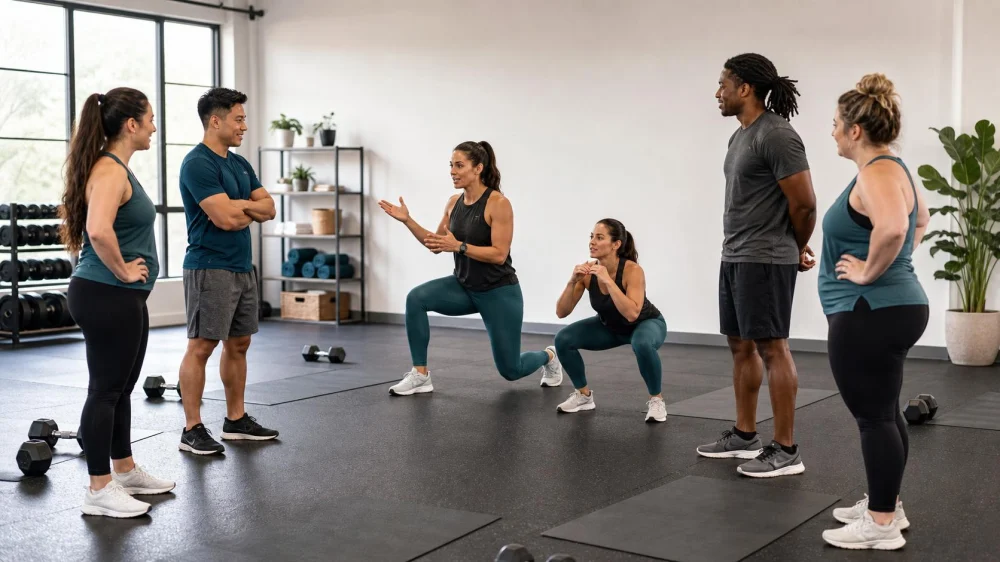
Group Fitness Class Trial: Match the Format and Level
On this page
Quick answer
Choose a group fitness class by matching its movements, pace, coaching style, equipment, and recovery demands to your current ability. Read the description, contact the instructor, and arrive early for a trial. Start below your maximum effort, keep an exit route and water accessible, and stop when technique breaks down or symptoms go beyond ordinary exercise effort.

UNIFY HEALTH + FITNESS / unify health & fitness studio
4221 E Chandler Blvd Suite #118-119, Phoenix, AZ 85048, USA
Understand the class format
A group fitness class trial is a low-commitment session used to evaluate whether a class's structure, instruction, environment, and physical demand fit a participant. The name alone may not explain what happens during the hour.
Ask how the session is organized:
- Is it continuous cardio, strength circuits, dance choreography, mobility work, cycling, intervals, or a mixed format?
- How long are the work periods, breaks, warm-up, and cooldown?
- Does the class use body weight, free weights, machines, steps, bands, bikes, or floor work?
- Are movements demonstrated before the pace begins?
- Do participants move through stations or remain in one assigned space?
- Is performance measured by repetitions, load, speed, distance, rhythm, or personal effort?
A fast transition format can feel harder than its exercise list suggests. Likewise, a low-impact label describes contact forces, not necessarily low cardiovascular effort or easy coordination.
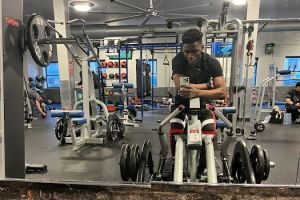
Crunch Fitness - Crown Heights / crunch crown heights brooklyn
842 Lefferts Ave, Brooklyn, NY 11203, USA
Match the level and physical demand
Labels such as beginner, all levels, and advanced are not standardized across United States fitness centers. Ask what a participant should already be able to do and how intensity is adjusted.
Consider five types of demand:
- Cardiovascular: how long effort stays elevated and how much recovery is provided;
- Strength: the loads, positions, grip, and fatigue expected;
- Mobility: the range of motion needed to enter and control positions;
- Coordination: how quickly sequences, direction changes, or rhythms must be learned; and
- Impact and balance: jumping, rapid steps, single-leg work, floor transfers, or unstable surfaces.
Choose a first class where you can reduce at least two variables, such as load and speed. A trial is for gathering information, not proving that you can match regular participants.
Evaluate instructor support
Contact the instructor or program manager before class when you need movement options, communication support, extra setup time, or clarification about an injury-related restriction. Share only the information necessary to exercise safely.
During the trial, look for an instructor who:
- explains the session plan and major risks before starting;
- demonstrates key movements from a visible position;
- offers a practical alternative without presenting it as failure;
- uses clear time or repetition cues;
- monitors the room instead of exercising continuously without observation;
- respects a participant's decision to reduce effort or stop; and
- knows the facility's emergency and incident process.
Hands-on correction should be explained and require consent. You should be able to decline touch and receive a verbal or visual cue when appropriate.
Check space, sound, and comfort
The room can change the difficulty and safety of a class. Notice spacing between participants, equipment storage, ventilation, floor grip, lighting, mirrors, speaker volume, and the location of water and exits.
For a crowded class, ask whether attendance is capped and how personal stations are marked. For a music-led class, confirm whether verbal cues remain understandable. If flashing lights, heat, scent, or loud sound affects you, ask what can be adjusted and whether another session uses a different environment.
Choose a position where you can see instructions and leave without crossing an active exercise lane. Do not place personal belongings where they create a trip hazard.
Use a safe trial-class process
- Read the full description. Check prerequisites, footwear, equipment, reservation rules, and cancellation charges.
- Ask one specific question. Describe the movement or condition that concerns you and ask how the class normally handles it.
- Bring familiar essentials. Use suitable shoes, clothing, water, and any prescribed rescue medication or device you normally carry.
- Arrive early. Meet the instructor, inspect equipment, identify the exit, and select a visible space.
- Begin conservatively. Use lighter resistance, smaller range, slower tempo, or a planned alternative.
- Apply an exit rule. Stop for sharp or escalating pain, loss of control, dizziness, faintness, chest pressure, unusual breathing difficulty, or a symptom covered by your medical action plan.
- Review afterward. Consider technique, symptoms, recovery, enjoyment, communication, and whether modifications were genuinely workable.
Limitations and safety notes
- General class descriptions do not replace advice from a qualified healthcare professional who knows your condition or recovery plan.
- Seek guidance before starting when pregnancy, recent surgery, an unstable condition, a new injury, or medication effects make exercise safety uncertain.
- Call emergency services for severe or urgent symptoms; do not rely on a class instructor to diagnose them.
- Delayed soreness can be common after unfamiliar exercise, but severe pain, marked swelling, profound weakness, dark urine, or worsening systemic symptoms need prompt medical assessment.
- A single enjoyable trial does not reveal every instructor, crowd level, or schedule condition. Confirm the session you plan to attend regularly.
Frequently asked questions
Is an “all levels” class suitable for a complete beginner?
Sometimes, but ask which movements are taught and what beginner options exist. “All levels” can mean participants scale independently rather than receive step-by-step instruction.
Where should I stand during a first class?
Choose a place with a clear view of the instructor, enough room for the movements, and a safe path to pause or leave. The front can be useful for visual instruction; the edge can make exits easier.
Should I tell the instructor about an injury?
Share relevant restrictions or warning signs before class, but do not expect diagnosis or rehabilitation advice outside the instructor's qualifications. Follow the plan provided by your healthcare professional.
How hard should a trial class feel?
Keep enough reserve to learn the movement and notice how your body responds. You should not need to match another participant's load, speed, or range. Technique and control take priority.
When should I choose a different class?
Choose another option when the required movements cannot be modified safely, instructions are unclear, the environment overwhelms essential cues, or staff dismiss reasonable safety questions.
Conclusion and next steps
Select two candidate classes and compare their format, prerequisites, coaching, environment, and modification options. Book one trial at a manageable level, arrive early, and record how you felt during the session and recovery. Continue only when the class supports safe technique, clear communication, and sustainable progress.
Evidence note: These recommendations reflect broad exercise-safety, coaching, and consumer-comparison principles. Individual restrictions should come from an appropriately qualified healthcare professional, and class procedures should be confirmed with the facility.






 Broadhurst Gymnasium - SNU4.0 (8 reviews)
 Crossfit Exceed4.0 (7 reviews)
 Pilates Studio City5.0 (5 reviews)
 CrossFit South Brooklyn4.0 (146 reviews)
 Burlingame Fitness4.0 (17 reviews)
 ATL Xtreme LLC3.0 (28 reviews)
 How to Improve Flexibility and Mobility Quickly: Tips and Techniques
 Why Everyone Should Try Cardio: Benefits of Cardio Fitness for All
 How to Combine Strength, Mobility, and Tempo Work to Prepare for Tough Fall Race Courses
 The Best Chest Workout for Muscle Growth at the Gym
 How to Use Minimal Equipment Full-Body Routines When You’re Traveling This Autumn
 Best Fall Recovery Nutrition: What to Eat After a Long Run or Hard Workout