Choose Gym Shoes for Strength, Cardio, and Classes
On this page
- Quick answer
- Start with the activity
- Shoes for strength training
- Shoes for treadmill and cardio work
- Shoes for studio and interval classes
- Run a careful fit check
- Test shoes before a full workout
- When two pairs make sense
- Know when to replace a pair
- Pain, injuries, and special needs
- Shopping checklist
- Frequently asked questions
- Evidence and sources
- Next steps
Quick answer
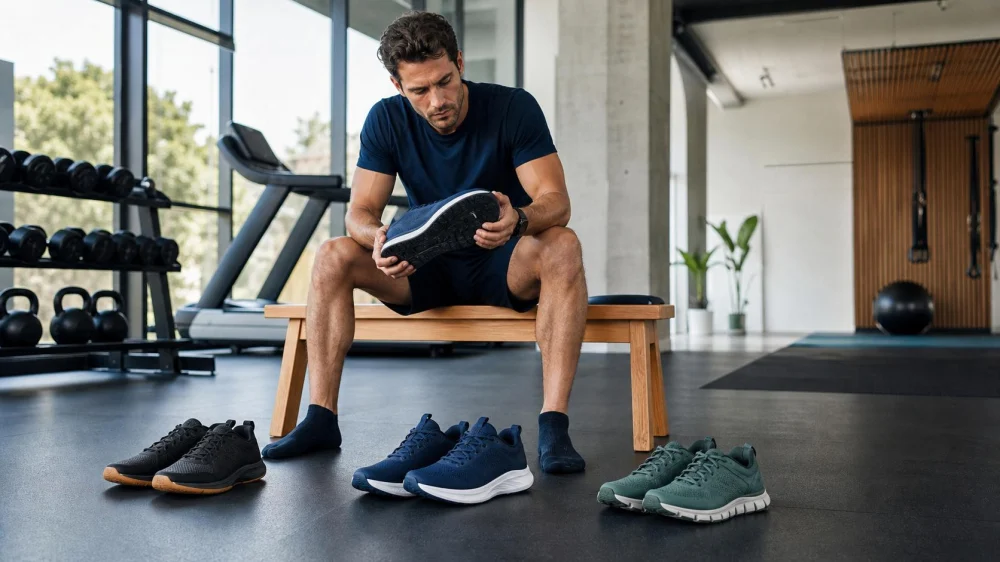
Choose gym shoes for the movements you perform most often. A stable, relatively firm base can suit controlled strength work. A running or walking shoe designed for forward motion can suit treadmill sessions. A cross-training shoe that balances stability, flexibility, and lateral support can suit mixed circuits and studio classes.
There is no single best shoe for every person or workout. Fit, foot shape, training surface, exercise technique, injury history, and the manufacturer’s intended use all matter. Try shoes late enough in the day that your feet are not unusually small, wear your normal workout socks, fit the larger foot, and test the exact movements you plan to do.
Modern Pilates / pilates manasquan
ManasquanMonmouth CountyNew Jersey
125 Main St, Manasquan, NJ 08736, USA
Start with the activity
The American Podiatric Medical Association advises people who participate in a sport two or three times per week to consider footwear made for that activity. The principle applies inside a gym: a shoe optimized for repeated forward running is built for a different job from one used for lateral class drills or heavy stationary lifts.
Review the last month of training. Estimate how much time you spend on:
- barbell, dumbbell, cable, or machine strength work;
- treadmill running or walking;
- rowing, cycling, stair climbing, or elliptical work;
- dance, court-style, boot-camp, or interval classes;
- short sprints, jumps, carries, or changes of direction;
- walking to and from the gym.
Buy for the dominant task, not the shoe category that looks most versatile online. If your routine contains two very different tasks, such as long treadmill runs and heavy barbell work, one compromise pair may be less comfortable than two purpose-appropriate pairs.

Planet Fitness / planet fitness manchester ct
ManchesterCapitol Planning RegionConnecticut
346 Middle Turnpike W, Manchester, CT 06040, USA
Shoes for strength training
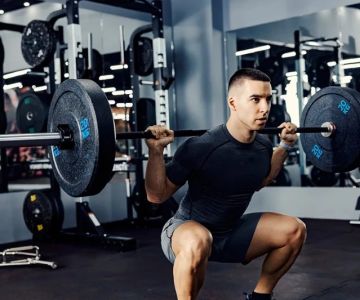
During squats, deadlifts, presses, and loaded carries, many lifters prefer a shoe that feels stable under the whole foot. A very soft, tall cushion can compress or shift under load. That does not make cushioning universally unsafe, but it may make the base feel less predictable for certain lifts.
Look for a secure heel, a sole that does not twist excessively, enough forefoot room to maintain natural foot position, and traction appropriate for the platform. A general cross-training shoe may work for a varied strength session. Purpose-built weightlifting shoes use a firm raised heel and straps; they can help some lifters reach positions for specific lifts but are not required for ordinary resistance training.
Do not copy another person’s barefoot or minimalist setup without considering gym rules, current conditioning, foot health, and the exercise. Transitioning abruptly to less cushioning or a different heel-to-toe geometry can change loading. Start with light technique work and increase exposure gradually.
Shoes for treadmill and cardio work
For repeated treadmill running, begin with footwear intended for running. Fit and comfort are more useful starting points than choosing solely by color, weight, or a dramatic cushioning claim. The shoe should hold the heel without painful pressure, allow the toes to move, and flex where your foot naturally bends.
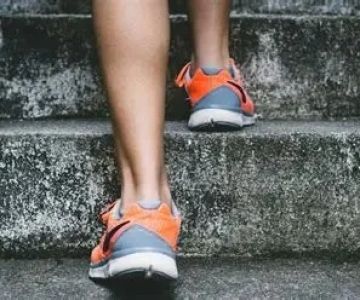
Walking can often use a walking or running shoe, depending on comfort and pace. For cycling, rowing, elliptical, and stair machines, secure lacing and a stable interface with the pedal or platform matter. Avoid loose laces that can enter moving equipment.
A thick running shoe may feel pleasant for steady forward motion but awkward in rapid lateral drills. If a treadmill run is only a short warm-up before lifting, a cross-trainer may be a reasonable compromise. If running is the main workout, select and test the shoe as a running shoe.
Shoes for studio and interval classes
Mixed classes can include side steps, pivots, squats, jumps, short runs, and floor transitions. Look for a cross-training or class shoe with lateral containment, a secure heel, suitable grip, and enough forefoot flexibility for the movements.
More grip is not always better. A sole that catches during a pivot can feel different from one designed for a studio surface. Ask the instructor about the floor, whether clean indoor-only shoes are expected, and whether the class involves dance turns, court-style changes of direction, or repeated impact.
For classes with jumping, land softly and manage training volume rather than expecting a shoe to replace technique and progression. Stop if the shoe slides, the heel lifts, or the foot moves over the edge of the midsole during side-to-side work.
Run a careful fit check
Shoe size is only a label. Models differ in length, width, toe-box shape, arch position, and internal volume. APMA consumer guidance recommends fitting for the larger foot and checking that the shoe bends near the ball of the foot rather than through the middle.
- Bring workout socks. Sock thickness changes volume and heel hold.
- Measure both feet. Size and shape can change over time.
- Check toe room. Toes should not press the front or overlap each other.
- Check width. The upper should not painfully squeeze or allow the foot to spill over the platform.
- Lock the heel comfortably. Minor movement can occur, but repeated lifting or rubbing predicts blisters.
- Inspect pressure points. Do not assume a painful hot spot will disappear after break-in.
Orthotics or insoles take up space. Bring them to the fitting and make sure the shoe’s removable liner, depth, heel counter, and shape accommodate them as directed.
Test shoes before a full workout
Use a store’s permitted test area or a clean home surface while the return option remains available. Walk, perform a controlled bodyweight squat, rise onto the balls of the feet, step laterally, and mimic a short lunge. For running shoes, jog if permitted.
The test should feel stable and comfortable immediately. Numbness, burning, pinching, toe impact, arch pressure, or rubbing are reasons to stop. Confirm the return policy before wearing shoes outdoors or in a full gym session.
For the first workout, reduce duration or load. Retie after warming up if swelling changes the fit, but do not tighten until the foot is numb. Record any discomfort and where it occurs.
When two pairs make sense
Two pairs can be useful when the demands conflict. Examples include long running sessions plus strength training, weightlifting practice plus dance classes, or indoor court work plus outdoor walking. The goal is not to buy more gear; it is to avoid forcing one design into jobs it performs poorly.
If the budget supports one pair, prioritize the activity with the most time, impact, or directional change. Use rental or trial options where available, and delay specialized footwear until the routine is consistent.
Know when to replace a pair
Do not rely on an exact mileage number for every shoe and person. Inspect the shoe and your experience. Replacement may be due when the outsole is worn smooth in critical areas, the midsole is visibly compressed or tilted, the heel counter is broken down, the upper no longer holds the foot, or the shoe develops damage that affects stability.
New discomfort can have many causes, so a worn shoe is not automatically the diagnosis. Compare the left and right shoes on a level surface, inspect the inside for torn lining, and consider recent changes in training volume or technique.
Air shoes after training and follow manufacturer cleaning instructions. Avoid high heat unless the label permits it because heat can alter adhesives and materials.
Pain, injuries, and special needs
Footwear advice cannot diagnose persistent foot, ankle, knee, hip, or back pain. Stop a workout for sudden severe pain, inability to bear weight, major swelling, deformity, loss of sensation, or a suspected fracture. Seek appropriate medical care.
People with diabetes, reduced sensation, circulation problems, recent surgery, significant deformity, or recurring wounds should obtain individualized advice before changing footwear. A podiatrist, sports medicine clinician, physical therapist, or other qualified professional can assess needs that a retail fitting cannot.
Shopping checklist
- Identify the main workout and surface.
- Bring normal socks, orthotics, or insoles.
- Measure both feet and fit the larger foot.
- Check toe room, width, heel hold, and pressure points.
- Match stability, cushioning, and lateral support to the task.
- Test representative movements on an approved surface.
- Confirm the return and warranty policy.
- Start with a shorter, lighter first session.
Frequently asked questions
Can I lift in running shoes?
For light or machine-based work, a comfortable running shoe may be acceptable. For heavier or balance-sensitive lifts, some people prefer a firmer, more stable base. Match the shoe to the exercise and your experience.
Do beginners need weightlifting shoes?
No. Beginners can learn many movements in stable, well-fitting training shoes. Specialized shoes are tools for particular movements, not a prerequisite for strength training.
Should gym shoes feel tight?
They should feel secure, not painfully tight. Toes need room, and there should be no numbness, burning, or concentrated pressure.
Is a cross-trainer good for treadmill running?
It may work for short intervals or warm-ups. For regular or longer running, a properly fitted running shoe is usually the more activity-specific place to start.
Evidence and sources
- American Podiatric Medical Association: Choosing Shoes for Sports
- American Podiatric Medical Association: How to Choose the Right Shoe
Next steps
Write down your three most common gym activities and rank them by time. Take your socks and any orthotics to a fitting, test the movements, and choose the pair that feels secure and comfortable for the highest-priority task.
After the first short workout, inspect your feet and record any pressure, rubbing, slipping, or instability. Exchange a poor fit while the return policy allows rather than trying to train through pain.
 Campanaro Strength & Conditioning0.0 (0 reviews)
 EōS Fitness4.0 (1351 reviews)
 StretchLab4.0 (75 reviews)
 YogaBlyss at the Yoga Garden5.0 (4 reviews)
 Apex Fitness5.0 (182 reviews)
 Elements Yoga Therapeutics5.0 (7 reviews)
 Science-Backed Tips for Improving Your Fitness: Expert Advice for Better Health
 How to Increase Upper Body Strength for Beginners | Hot Fitness
 The Best Exercises to Improve Glute Activation and Running Power Before Your Next Race
 Science-Backed Tips for Improving Your Healthy Lifestyle
 How to Build a 6-Week Speed Block That Builds Confidence and PR Potential for Autumn 5Ks
 How to Build a Mobility Habit: 7 Daily Moves That Improve Performance