
Gym Bag Hygiene: Clean Towels, Bottles, and Gear
On this page
- Quick answer
- Why gym-bag hygiene matters
- Pack clean and dirty zones
- Handle towels and workout clothes
- Clean reusable water bottles
- Clean small workout gear
- Use shared equipment more safely
- Protect cuts and watch skin changes
- Clean and dry the bag itself
- Build a five-minute unpacking routine
- Health and product-safety limits
- Gym hygiene checklist
- Frequently asked questions
- Evidence and sources
- Next steps
Quick answer
Keep clean items separate from used clothing, unpack the bag as soon as possible, wash and completely dry towels and workout clothes after each use, and clean reusable bottles according to their manufacturer’s directions. Do not share towels, razors, clothing, or open personal-care products.
Wash or sanitize hands before and after using shared equipment, use a clothing or towel barrier on surfaces that contact bare skin, and cover cuts with clean, dry bandages. Clean personal gear with a product and method approved for its material. Never put surface disinfectant on skin or mix cleaning chemicals.
Valencia Fitness Club / valencia health club elmont ny
1319 Hempstead Turnpike, Elmont, NY 11003, USA
Why gym-bag hygiene matters
A gym bag collects sweat, skin oils, damp textiles, bottles, shoes, and items that touch shared surfaces. The bag does not need to look dirty to carry moisture or contamination from one item to another.
The Centers for Disease Control and Prevention notes that MRSA and other germs can spread in athletic settings through skin contact, shared items, and contaminated surfaces. Cuts and abrasions can provide an entry point. The goal is not to sterilize every object; it is to interrupt avoidable transfer and prevent damp gear from sitting in a closed bag.
A simple system is more reliable than occasional deep cleaning. Assign clean and used zones, carry only what you can maintain, and make unpacking part of the workout.

Anytime Fitness / anytime fitness park
Manassas ParkPrince William CountyVirginia
8224 Spruce St, Manassas Park, VA 20111, USA
Pack clean and dirty zones
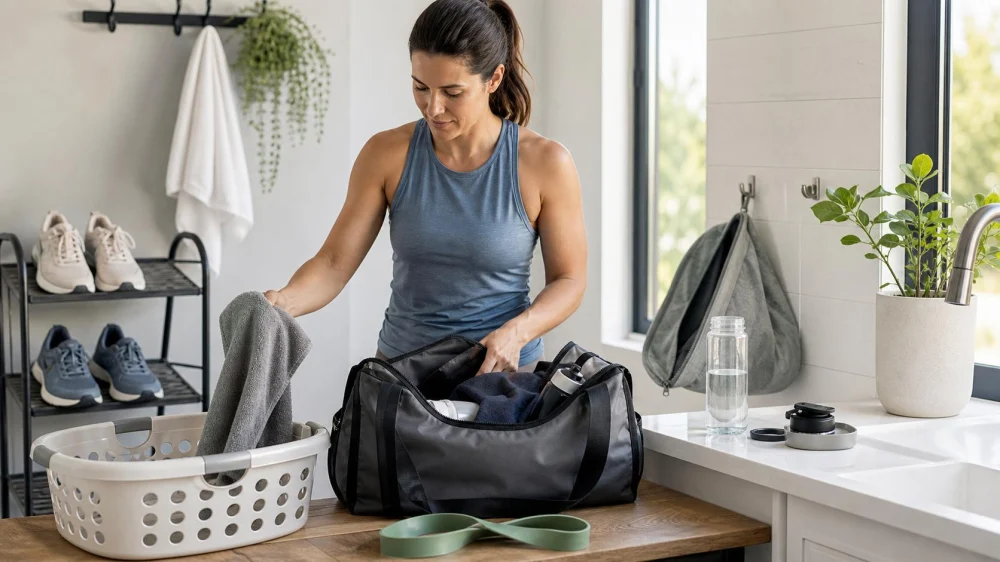
Use separate washable pouches or compartments. One holds clean clothes, a fresh towel, bandages, and personal toiletries. Another receives used clothing and the damp towel. Keep shoes away from bottle mouthpieces and clean garments.
A water-resistant wet bag can contain moisture during the trip home, but it is temporary storage. Do not leave wet textiles sealed inside overnight. Empty and dry the pouch after use.
Pack personal items rather than borrowing or sharing. CDC athlete guidance specifically advises against sharing towels, washcloths, razors, clothing, and ointments from open containers. If you need soap, use a personal liquid container rather than shared bar soap.
Carry a few clean, dry bandages in a sealed packet. Replace anything with damaged packaging, and check expiration dates on first-aid products.
Handle towels and workout clothes
Use a clean towel for each session. If the towel becomes soaked or touches the floor, put it in the used-items zone. Do not use the same towel for wiping equipment, drying after a shower, and wiping your face.
CDC guidance for athletes recommends washing and completely drying uniforms, towels, and clothing after each use while following the care label. It specifically favors complete machine drying rather than leaving athletic textiles damp. Heat settings still must follow the garment label.
At home:
- Remove clothing and towels immediately.
- Keep dirty laundry away from clean bedding and towels.
- Follow fabric labels for detergent, water temperature, and drying.
- Wash hands after handling visibly dirty or wound-contaminated laundry.
- Dry the hamper or wet pouch if it is damp.
Do not add extra disinfectant, bleach, or fragrance without checking both the textile label and product directions. More chemical is not automatically more effective and can damage fabric or irritate skin.
Clean reusable water bottles
Use a bottle only for the beverages allowed by its manufacturer. Empty it after the workout. Disassemble removable lids, straws, valves, and gaskets as directed because moisture and residue can remain in small spaces.
Follow the bottle’s cleaning instructions. If the parts are dishwasher-safe, place them as directed. If handwashing is required, use clean water, dish soap, and an appropriately sized brush; rinse and allow every part to air-dry fully before reassembly. Store the bottle open until dry.
Do not share mouthpieces. Keep the lid closed in the bag and avoid placing the drinking surface directly on a bench or machine. Replace parts that remain cracked, damaged, moldy, or impossible to clean.
A strong chemical disinfectant intended for hard facility surfaces may not be safe for food-contact bottle parts. Do not improvise concentrations or mix products.
Clean small workout gear
Personal items such as lifting straps, gloves, bands, yoga blocks, mats, heart-rate straps, headphones, and phone cases have different materials and electronics. Check manufacturer instructions before applying moisture or disinfectant.
For washable textiles, follow the label and dry completely. For sealed hard surfaces, remove visible soil first if the product instructions require it, apply an approved cleaner, observe any stated contact time, and let the item dry. Do not spray liquid into ports, seams, speakers, or battery compartments.
Retire an item when cracked foam, torn fabric, peeling surfaces, or deep crevices prevent effective cleaning. CDC facility guidance similarly recommends repairing or disposing of shared equipment with damaged surfaces that cannot be adequately cleaned.
Keep workout shoes ventilated. Remove damp insoles only if the manufacturer permits it, loosen laces, and let shoes dry away from direct high heat. Rotate pairs if a shoe is still damp at the next session.
Use shared equipment more safely
Follow the gym’s posted cleaning process. Wipe shared equipment after use with the supplied product and allow the surface to remain wet for the label’s required contact time when applicable. Do not combine the gym’s wipes with another chemical.
CDC recommends hand hygiene before and after activities that include shared weight-training equipment. Soap and water are preferred when hands are visibly dirty; alcohol-based hand sanitizer is an alternative when appropriate.
Use a barrier such as clothing or a clean towel between bare skin and benches, mats, sauna seats, or similar shared surfaces. Keep the barrier’s skin side consistent, then place it in the used-items compartment.
Avoid touching the face or an open cut during the workout. Wash or sanitize hands before adjusting contact lenses, eating, or handling a mouthguard.
Protect cuts and watch skin changes
Cover cuts and abrasions with a clean, dry bandage until healed. Change a bandage if it becomes wet, loose, or unable to contain drainage. Wash hands before and after wound care, and dispose of used materials in the trash.
Do not place cleaners or disinfectants on skin or wounds. Do not pick, squeeze, or try to drain a suspicious sore. CDC advises prompt medical evaluation for possible skin infection.
Warning signs can include a painful bump or sore, pus, redness, swelling, warmth, or worsening symptoms around a scrape. Fever, rapidly spreading redness, severe pain, or feeling very ill requires urgent medical assessment. A clinician may need testing because appearance alone cannot identify MRSA.
People with active infections or wounds that cannot be securely covered should follow healthcare guidance and gym rules. Avoid public pools, whirlpools, or therapy pools with an open wound until a healthcare professional says it is safe.
Clean and dry the bag itself
Check the bag’s care label. Empty every pocket, shake out debris outdoors or into trash, and remove washable inserts. Spot-clean, handwash, or machine-wash only as permitted. Pay attention to the base, shoe compartment, handles, zipper pulls, and the wet-item pouch.
Dry the bag completely with pockets and zippers open. Do not return clean items while seams or padding remain damp. If the bag has a persistent odor, identify forgotten food, a leaking bottle, wet foam, or damaged lining rather than masking it with fragrance.
Replace a bag if mold-like growth returns after correct cleaning, the lining cannot dry, or damaged surfaces trap residue. Do not use incompatible bleach or disinfectant on an unknown fabric.
Build a five-minute unpacking routine
- Put the bottle by the sink and open all parts.
- Move towels and clothes to laundry.
- Ventilate shoes and protective gear.
- Discard used bandages or empty wrappers.
- Wipe approved small items and the phone case.
- Open the bag and wet pouch to dry.
- Restock one clean towel, bandages, and toiletries.
Attach the routine to an existing habit, such as placing keys in their usual spot. A small drying rack or labeled bin near the entry can prevent damp items from disappearing into the bag.
Health and product-safety limits
This article provides general hygiene information, not diagnosis or treatment. People with weakened immune systems, recurring skin infections, chronic wounds, diabetes, or recent surgery should ask a healthcare professional for individualized precautions.
Always follow the label for cleaners, disinfectants, textiles, electronics, bottles, and gym equipment. Never mix bleach with ammonia, acids, or other cleaners. Use ventilation and protective equipment specified on the label, keep chemicals away from children, and do not apply environmental disinfectants to the body.
Gym hygiene checklist
- Pack clean and used items separately.
- Bring a clean towel and personal bottle.
- Do not share skin-contact items.
- Clean hands around shared equipment.
- Use a barrier on shared bare-skin surfaces.
- Cover cuts with clean, dry bandages.
- Wash and fully dry textiles after each use.
- Clean bottles and gear by manufacturer instructions.
- Unpack and ventilate the bag promptly.
- Seek care for signs of skin infection.
Frequently asked questions
Can I leave sweaty clothes in a wet bag overnight?
A wet bag is for transport, not storage. Remove the contents promptly, wash them according to the label, and dry the pouch.
Should I spray disinfectant inside my shoes?
Only use a product and method approved by the shoe manufacturer. Some chemicals can damage materials or irritate skin. Ventilation and complete drying are safe starting points.
Do I need to wipe equipment before and after use?
Follow the facility’s instructions. Cleaning after use protects the next person; wiping before use may add a personal layer when the gym permits it. Use the supplied product correctly.
Can a skin infection be treated at home?
Do not try to diagnose, pop, or drain a suspicious sore. CDC recommends prompt evaluation because laboratory testing may be needed.
Evidence and sources
- CDC: Athletes—MRSA Prevention and Control
- CDC: Athletic Facilities—MRSA Prevention and Control
- CDC: Preventing MRSA
Next steps
Empty your gym bag now. Create one clean compartment and one washable used-item zone, inspect the bottle gasket and gear surfaces, and place damp textiles in laundry.
For the next week, time the unpacking routine. Remove steps you do not need, keep the supplies easy to reach, and make complete drying the nonnegotiable finish.

 Campanaro Strength & Conditioning0.0 (0 reviews)
 EōS Fitness4.0 (1351 reviews)
 StretchLab4.0 (75 reviews)
 YogaBlyss at the Yoga Garden5.0 (4 reviews)
 Apex Fitness5.0 (182 reviews)
 Elements Yoga Therapeutics5.0 (7 reviews)
 Science-Backed Tips for Improving Your Fitness: Expert Advice for Better Health
 How to Increase Upper Body Strength for Beginners | Hot Fitness
 The Best Exercises to Improve Glute Activation and Running Power Before Your Next Race
 Science-Backed Tips for Improving Your Healthy Lifestyle
 How to Build a 6-Week Speed Block That Builds Confidence and PR Potential for Autumn 5Ks
 How to Build a Mobility Habit: 7 Daily Moves That Improve Performance