

How to Build a Warm-Up That Fits Your Workout
On this page
Quick answer
A useful warm-up matches the workout. Spend a few minutes raising body temperature, move the joints and ranges the session needs, then rehearse the exact activity at gradually higher speed or load. Finish feeling prepared, not tired. Add time in cold conditions, after long sitting, or before fast and heavy work; shorten it for easy sessions when readiness is already good.
What a warm-up should do
A warm-up is a gradual transition from rest to the movement, load, speed, coordination, and environment of the planned activity. It should improve readiness without consuming the energy needed for the main session.
A generic ten-minute routine is not automatically wrong, but it may waste time on ranges the workout does not use while missing the specific movement that needs preparation.
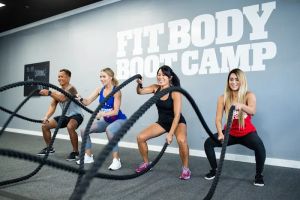
South Chandler Fit Body Boot Camp / south chandler fit body boot camp
ChandlerMaricopa CountyArizona
25410 S Arizona Ave suite 186, Chandler, AZ 85248, USA
The three-part framework
- Raise: use easy walking, cycling, rowing, or low-impact movement until breathing and temperature rise slightly.
- Mobilize and activate: move relevant joints through comfortable ranges and practice control where the session requires it.
- Rehearse: perform the workout movement with low load or speed, then increase in steps.
Most recreational sessions can use this order in roughly 5–15 minutes, but duration depends on the person, activity, intensity, age, temperature, injury history, and time since last movement.
Warm up for strength
- Begin with two to five minutes of easy whole-body movement.
- Practice the lift pattern using body weight, a dowel, empty machine, or light implement.
- Use several ramp-up sets that add load while reducing repetitions.
- Rest enough that the warm-up does not become conditioning.
- For later exercises using already-warm muscles, fewer preparation sets may be sufficient.
Best for a heavy compound lift is specific rehearsal. Not ideal is performing many high-repetition sets to fatigue or jumping from an empty bar directly to a near-maximal load.
Warm up for cardio
Start with the same mode at an easy pace when practical: walk before running, spin easily before cycling, or swim relaxed lengths before faster repeats. Increase pace or resistance in small steps.
Use the talk test: easy work allows comfortable conversation; moderate effort allows talking but not singing. Save vigorous, breath-limiting work for after the body has adapted. Before intervals, include one or two short controlled accelerations below maximal effort.
Warm up for classes and sports
Preview direction changes, landing, balance, reaction, and skills used in the activity. A court session might progress from jogging and lateral steps to controlled deceleration and submaximal practice. A dance class might use rhythmic movement, joint-specific ranges, and simplified combinations.
Do not turn the warm-up into a competition. Complex drills performed while cold or unfamiliar can create risk rather than readiness.
Mobility and stretching choices
Use controlled dynamic movements when the session needs active range, such as leg swings within control, arm circles, ankle rocks, or squat-to-stand patterns. Move smoothly and avoid forcing end range.
Long static holds may be useful for a separate flexibility goal or when a clinician prescribes them. Immediately before maximal strength, speed, or power, prioritize movement-specific preparation and use static work thoughtfully so it does not leave the target muscles feeling less ready.
Readiness checks
- Movement feels smoother with each step.
- Normal range is available without sharp pain.
- Breathing rises gradually and remains controlled.
- Balance and coordination feel predictable.
- Practice repetitions match the planned technique.
- You feel alert and warm, not exhausted.
If readiness worsens, reduce the workout, choose an easier variation, or stop. A warm-up is useful information, not a test you must pass.
Three practical examples
Full-body strength day
Three minutes easy cycling; controlled ankle, hip, and shoulder movements; body-weight squats and light rows; then three progressively heavier squat practice sets.
Easy run
Five minutes brisk walking; ankle and hip movements; five minutes easy jogging. Continue easy if the goal is recovery; no sprint is required.
Interval cycling
Five minutes easy spinning; three gradual one-minute increases separated by easy pedalling; one short submaximal effort; then recover before the first work interval.
Limitations and safety notes
This framework is general exercise education, not rehabilitation. Pain, surgery, pregnancy, cardiovascular or pulmonary disease, neurological conditions, and medication effects may require clinician or physical-therapist guidance.
Stop and seek urgent care for chest pain or pressure, fainting, severe unusual breathlessness, stroke signs, or a serious injury. Do not use a longer warm-up to override illness, heat stress, or worsening pain.
Frequently asked questions
How long should a warm-up be?
Long enough to improve readiness without fatigue—often 5–15 minutes, but longer for intense work, cold conditions, complex skills, or individual needs.
Do I need to sweat?
No. A slight temperature and breathing rise can be enough. Sweat varies with climate, clothing, hydration, and the person.
Is foam rolling required?
No. It can be an optional brief tool if it improves comfort or movement, but it should not replace specific rehearsal or medical evaluation of pain.
Can warm-up sets count as training sets?
They contribute some volume, but their main purpose is preparation. Track them separately when fatigue or total load matters.
Sources and evidence notes
Intensity language uses CDC’s relative-intensity and talk-test guidance. The three-part framework reflects broad coaching practice; exercise-specific and clinical needs may differ.
Next steps
Write the first demanding movement in your next workout, then choose one raise activity, two relevant mobility movements, and two or three rehearsal steps. Time the routine, rate readiness, and remove anything that adds fatigue without improving the main movement.





 On Track Fitness5.0 (1 reviews)
 BELLSFIT60 LLC5.0 (10 reviews)
 Broken Barbell Gym4.0 (37 reviews)
 PAR Performance5.0 (10 reviews)
 CrossFit Williamsville4.0 (36 reviews)
 ZenLife Center for Healing4.0 (86 reviews)
 Beginner’s Guide to Clean Eating for Fitness
 How to Integrate Mobility Work Into Your Daily Routine Without Extra Time
 How to Use Progressive Overload Without Access to Heavy Weights This Autumn
 The Best Ways to Keep Motivation High When the Days Get Shorter This Late Fall Season
 How to Build a 10-Week Strength and Speed Plan for Fall Races | Hot Fitness
 How to Stay Motivated in Your Cardio Routine: Tips and Tricks