
Barbell Plates and Collars: Load and Unload in Balance
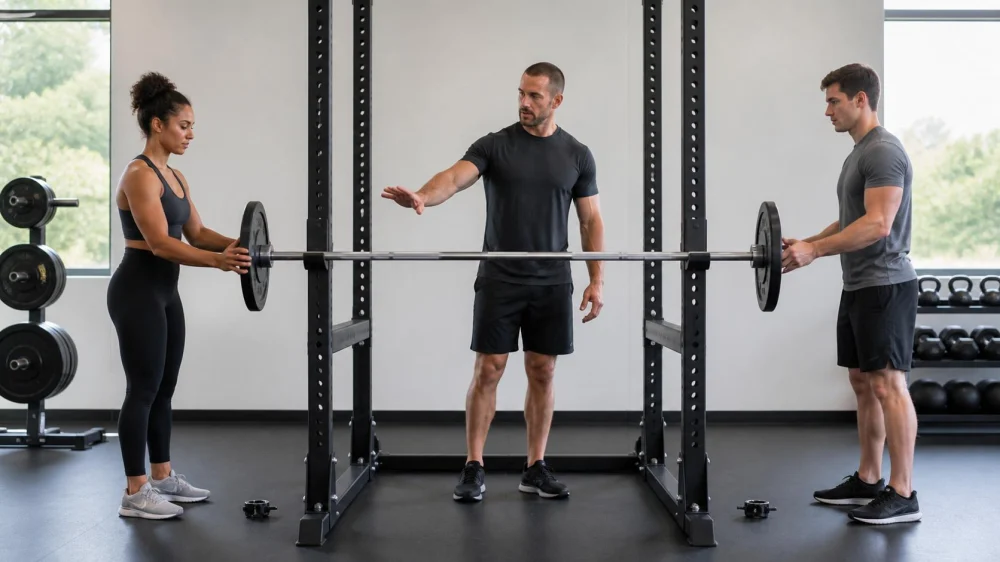
A barbell can tip, roll, or shed plates before a set begins. The risk increases when one end is loaded while the other is light, the rack is narrow, collars are missing, or people walk through the sleeve area. Use the facility’s bar, rack, plates, and collars as designed, keep the station clear, and change weight symmetrically with the bar fully supported.
Quick answer
Make sure the bar is centred and fully supported on stable hooks or the platform. Clear people and objects from both sleeve ends. Add one plate to one side, then the matching plate to the other before adding the next pair. Push plates fully inward and use compatible collars when the exercise and facility require them. To unload, keep the bar supported and remove matching plates in alternating pairs; never strip one entire side of a heavily loaded racked bar.
Crunch Fitness - Crown Heights / crunch lefferts
842 Lefferts Ave, Brooklyn, NY 11203, USA
Inspect the station and equipment
Confirm that the bar, rack, bench, hooks, safeties, plates, collars, and platform belong together and are rated for the intended use. Check for bent bar shafts, loose sleeves, sharp burrs, cracked plates, damaged collar locks, unstable hooks, loose rack bolts, or a bench that slides.
Centre the bar so equal sleeve length extends on each side. Verify both ends sit fully in the hooks and cannot be bumped out while plates move. Set rack safeties and hooks to the intended exercise before loading.
Do not use an out-of-service station or improvise with mismatched clamps, chains, or objects. Notify gym staff about damage.
MoCo CrossFit / moco crossfit
RockvilleMontgomery CountyMaryland
15265 Display Ct, Rockville, MD 20850, USA
Create a clear sleeve zone
Each sleeve needs room for the plate diameter, your stance, and a safe path from storage. Move bags, bottles, loose plates, clips, and phones away. Ask bystanders to stay outside the line of the bar ends.
Communicate with a training partner: one person controls the change, and neither touches the bar or plates without a cue. In a busy gym, face the open sleeve area rather than stepping backward into traffic.
Use plate trees nearest the station without carrying plates across active lifting lanes. Carry one manageable plate at a time with a secure grip and clear view of the floor.
Load plates symmetrically
- Confirm the empty bar is centred and stable.
- Place one selected plate on the first sleeve and slide it fully inward.
- Move to the other side and add the matching plate.
- Repeat one pair at a time, using the same plate size and order on both sides.
- Visually compare the stacks and total before attaching collars.
- Check that no plate or collar contacts the rack upright through the planned movement.
Small loading differences can matter. Include the bar, plates, collars, chains, bands, and any specialty attachments in the plan. Do not rely only on colour; plate colours and units vary by gym.
Use compatible collars
Collars help prevent plates from sliding during many free-weight movements. Use the collar type approved for the bar sleeve and exercise. Open or loosen it fully before sliding, position it against the outer plate, and lock it according to its design with fingers clear of pinch points.
Some landmine, rack, plate-loaded machine, technique, or specialty situations use different retention rules. Follow facility and coach instructions. A collar does not correct a tilted bar, mismatched plates, poor control, or a damaged sleeve.
After securing both sides, give each collar a deliberate visual and light manual check. If it moves or will not lock, replace it rather than stacking multiple faulty collars.
Unload without tipping the bar
Re-rack the bar securely and let all movement stop. Confirm both hooks support it and clear the area. Remove collars and place them where no one can step on them.
Remove the outer plate from one side, then the matching outer plate from the other. Continue alternating pairs. On a heavily loaded bar, removing every plate from one sleeve can leave the remaining side with enough leverage to flip or launch the bar.
If the station, bar type, or loading makes the safe sequence uncertain, ask staff or a qualified coach. Do not sit or hang on the unloaded side to counterbalance it. Do not stand directly in line with a sleeve while another person removes plates.
Return plates and reset the rack
Carry plates to the designated tree or rack and place them by size if the facility uses that system. Do not lean plates against walls, uprights, mirrors, or benches; they can roll or fall.
Return collars to their holder, remove personal attachments, centre the empty bar, and leave hooks and safeties in a neutral facility-approved position. Wipe touch surfaces using the gym’s method without spraying liquid into bearings or locks.
Report a plate that wobbles, a collar that slips, or a sleeve that makes a new grinding sound. Small equipment changes are easier to address before the next lifter loads the station.
Exercise and equipment limits
This article addresses handling plates and collars, not barbell exercise technique or personalized loading. Olympic, powerlifting, fixed-weight, standard-diameter, axle, safety-squat, trap, and specialty bars can use different sleeves and procedures.
Use qualified coaching for unfamiliar lifts and heavy loading. People with injury, recent surgery, pregnancy, cardiovascular or neurological conditions, pain, or other medical concerns may need individualized guidance. Call emergency services for a crush injury, collapse, chest pain, severe breathing trouble, or another emergency.
Frequently asked questions
Do I need collars for every barbell exercise?
Requirements vary with the movement, bar, facility, coaching method, and emergency plan. Follow the gym and qualified coach.
Can I load all plates on one side first?
Do not do so on a racked bar. Alternate matching plates to keep the load balanced and reduce tipping risk.
Why should plates be pushed fully inward?
It reduces leverage on the sleeve, keeps stacks consistent, and leaves the collar positioned correctly.
Can two people unload at the same time?
Only with clear coordination and a stable supported bar. Unplanned simultaneous movement can pinch hands or shift balance.
Next steps
Before the next barbell session, inspect the bar and rack, centre the shaft, set safeties, and clear both sleeve zones. Load one matching pair at a time, attach approved collars, and verify symmetry. After the set, re-rack fully, remove plates in alternating pairs, and return every plate and collar to stable storage.


 RockSalt Pilates4.0 (17 reviews)
 Genesis Health Clubs - Cass4.0 (942 reviews)
 Nettle Mill Clubhouse4.0 (28 reviews)
 Lagreemixx (Henderson)5.0 (32 reviews)
 Alpha Fit Club5.0 (87 reviews)
 The King Of Gains Gym & Nutrition Center4.0 (150 reviews)
 10 Common Fitness Mistakes to Avoid for Better Results
 How to Incorporate Muscle Gain Into Your Day With Simple Routines
 Advanced Techniques for Better CrossFit Results: Boost Your Performance
 How to Stay Motivated in Your Fitness Journey: Tips and Strategies
 Science-Backed Tips for Effective Strength Training
 Pilates Ball Workouts for Strength and Stability — No Reformer Required