
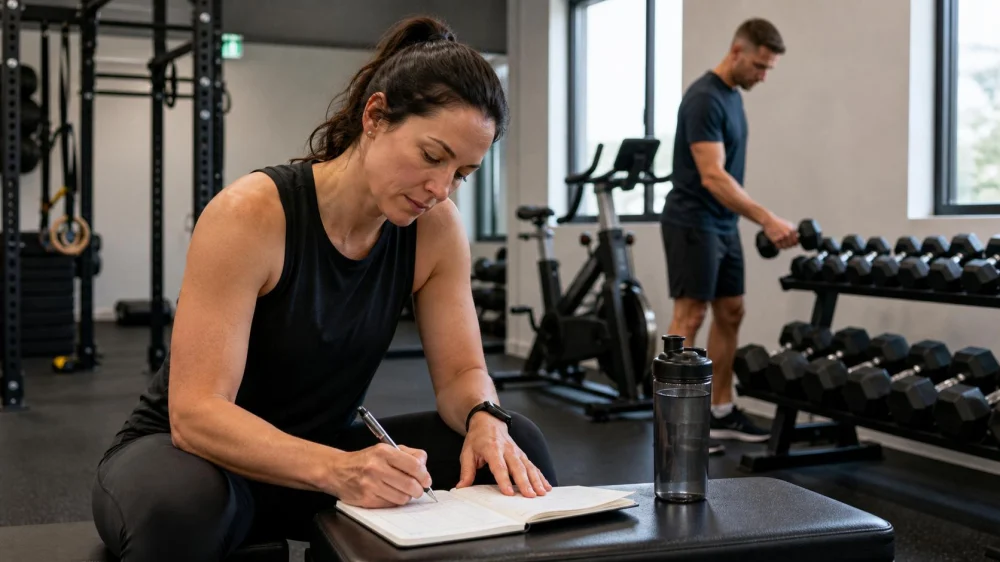
Workout Log: Track Sets, Effort, Symptoms, and Gradual Progress
A workout log is not just a list of personal records. It can show what you planned, what you actually completed, how hard it felt, and what symptoms or recovery factors changed. A simple consistent record helps you progress gradually, explain patterns to a coach or clinician, and avoid making decisions from one unusually good or bad day.
Define the Purpose
Choose the main question the log should answer: consistency, strength progression, aerobic duration, technique practice, return after a break, or symptom response. Too many fields make a log hard to maintain. Start with a small repeatable template and add detail only when it supports a decision. Avoid turning every workout into a competition with the previous entry.
Dahlgren Fitness Center / dahlgren fitness center
DahlgrenKing George CountyVirginia
17540 Dahlgren Rd Bldg 1610, Dahlgren, VA 22448, USA
Record Session Basics
Write the date, location, start time, session type, approximate duration, warm-up, and relevant environment such as heat or altitude. Note whether equipment differed from usual. Record cancelled or shortened sessions too; missing entries can hide fatigue, scheduling barriers, or illness. Use a consistent name for each exercise so later comparisons are meaningful.

The Southside Boxing Club / southside boxing gym
PittsburghAllegheny CountyPennsylvania
428 Bingham St, Pittsburgh, PA 15203, USA
Log Strength Work
For resistance training, record exercise, variation, equipment, load, sets, repetitions, rest, and any intentional tempo or range modification. Distinguish planned from completed work. Do not count assisted repetitions as independent ones. A video or technique note may be useful with consent and safe camera placement, but numbers do not prove good form or appropriate loading.
Log Cardio Work
For walking, running, cycling, swimming, or machines, record time, distance when reliable, route or setting, intervals, incline or resistance, and easy versus hard portions. Consumer devices can estimate metrics but may be inaccurate or inconsistent. Use the same device and method when comparing trends, and do not ignore symptoms because a watch reports a reassuring number.
Rate Relative Effort
Add a simple perceived-effort rating and a short description such as “could speak in sentences” or “last repetitions slowed.” Relative effort accounts for daily fitness and conditions better than copying another person’s pace. Use a scale consistently, define its endpoints, and avoid false precision. Coaches may use other systems, so record the method rather than only a number.
Record Symptoms Precisely
Note the body location, sensation, start time, exercise, intensity, duration, and what happened after stopping. Avoid diagnosing the cause in the log. Stop for alarming or worsening symptoms and follow appropriate medical guidance. Chest pain, severe breathing trouble, fainting, sudden neurological symptoms, or serious injury signs warrant urgent evaluation, not another test set.
Add Recovery Context
Include sleep quality, unusual stress, illness, travel, soreness, hydration access, and major schedule changes when they clearly matter. Do not treat the log as a medical chart or blame every performance change on one factor. Medication, chronic-condition, pregnancy, or recovery questions belong with a healthcare professional who can interpret them in context.
Change One Variable Gradually
Use the record to adjust duration, frequency, intensity, load, or complexity in manageable steps rather than increasing everything together. The Physical Activity Guidelines for Americans recommend increasing physical activity gradually; people with lower fitness may need to start with light activity. Individual progression depends on experience, goals, and health.
Review Trends
Review weekly or monthly, not after every imperfect session. Look for repeated missed sets, worsening effort at the same workload, recurring pain, lack of recovery, or steady comfortable adaptation. A coach can help distinguish normal variability from a programming issue. A clinician should evaluate health symptoms; do not use a spreadsheet formula to clear yourself medically.
Protect Health Information
Decide who can see the log before storing medical details, photos, location routes, or gym attendance. Use device locks, strong passwords, and app privacy settings. Share only the relevant portion with a coach or clinician through an agreed method. Delete public location metadata when it could reveal home, school, work, or routine travel patterns.
Design a one-page template with fixed fields and a small free-note area. Prewrite the planned session, then fill in actual results without erasing the original target. Use standard units and identify whether a machine’s displayed weight, a barbell total, or a single dumbbell is being recorded. If an app changes or a notebook is lost, a periodic export or photo backup preserves trends. Keep health records in a secure location instead of posting every completed page publicly.
When returning after illness, injury, pregnancy-related change, or a long break, start a new phase in the log rather than comparing directly with an old peak. Note any professional restrictions and the date they were given. The record should support the current plan, not pressure you to recreate a previous workload before your body and healthcare guidance allow it.
The best workout log is small enough to keep and specific enough to guide one decision. Record the session, effort, symptoms, and recovery context; progress one variable gradually; review trends calmly; and protect sensitive information. Consistency beats a perfect template that is abandoned after a week.


 Sweatline Fitness4.0 (11 reviews)
 Love and Light Yoga and Wellness5.0 (16 reviews)
 The Bar5.0 (3 reviews)
 Snap Fitness Hollymead4.0 (110 reviews)
 Gym on 5th4.0 (7 reviews)
 New Leaf Fitness Center4.0 (23 reviews)
 Best Exercises for Strengthening Your Entire Core | Hot Fitness
 10 Common Mistakes to Avoid in Yoga: Expert Tips for a Safe Practice
 How to Safely Use Short Hill Repeats and Strength Circuits for Leg Power This Autumn
 How to Improve Recovery with Proper Nutrition and Sleep Strategies
 Beginner’s Guide to Muscle Gain for Effective Strength and Growth
 How to Train for Back-to-Back Races: Recovery, Nutrition and Smart Volume Management