
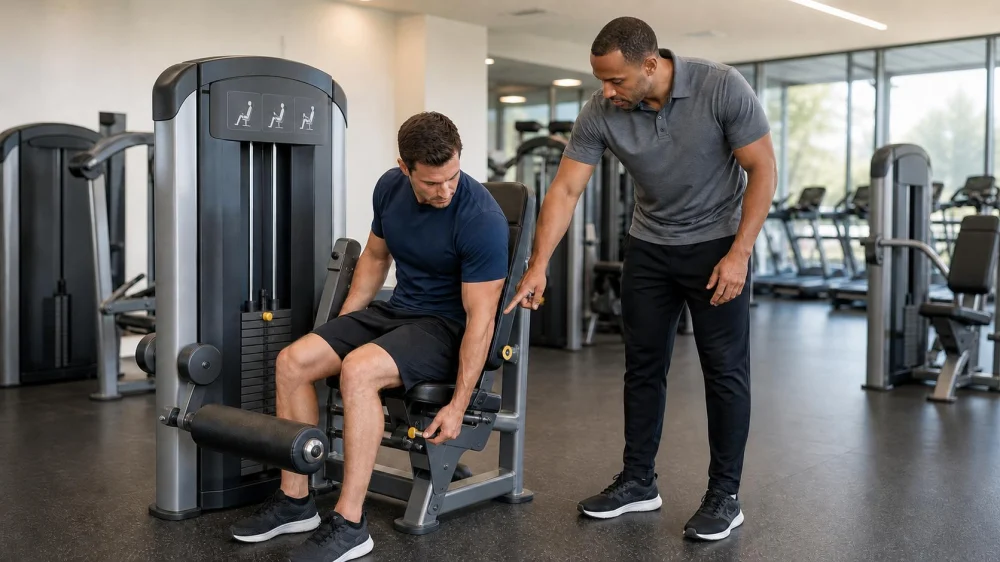
Weight Machine Setup: Adjust the Seat, Pin, and Start
A selectorized weight machine can guide movement, but it does not adjust itself to your body. Seat height, back support, pivot alignment, range stop, weight pin, and starting handle all affect whether the first repetition is controlled. Set the machine with no load or a light load, read its placard, and ask gym staff when the controls or intended movement are unclear.
Quick answer
Read the machine’s own instructions and inspect cables, pads, pins, guards, and moving parts. Adjust the seat and supports before selecting a working load. Align your joint with the machine’s marked pivot when the design calls for it, set a comfortable range, insert the correct pin fully, and start lighter than expected. Perform one slow test repetition without bouncing, locking out forcefully, or letting the stack slam. Stop for pain, dizziness, equipment movement, or unusual sound.
Rising Sky Gymnastics and Fitness Center - NW Phoenix / rising sky gymnastics
3343 W Greenway Rd, Phoenix, AZ 85053, USA
Inspect before sitting down
Walk around the machine without entering another user’s space. Check for an out-of-service sign, loose frame, torn pad, frayed cable, cracked belt, bent guide rod, missing guard, loose handle, foreign object, or selector pin tied to a cable that is damaged or too short.
Make sure the weight stack is fully at rest and no one is adjusting it from the other side. Some stations share a frame or stack. Confirm that the floor and access path are dry and that bags, bottles, and plates do not block the moving arms.
Do not use equipment that moves on the floor, drops unevenly, catches, grinds, or has exposed damage. Marking it with your own note can create confusion; notify staff and keep others clear.

Stallworth Boxing Academy / stallworth boxing academy
PittsburghAllegheny CountyPennsylvania
2621 Centre Ave, Pittsburgh, PA 15219, USA
Set the seat and body supports
Remove the load or choose the lightest practical setting before adjusting. Use the designed handle or lever, support the seat so it does not drop, and ensure the adjustment pin clicks or passes fully into its hole. Never place fingers beneath a moving seat or pad.
Set the back pad so you can maintain the posture shown on the placard without sliding or arching to reach handles. Footplates should support stable contact. Thigh, shin, chest, or arm pads should contact the intended area without pressing directly into a joint or restricting breathing.
Body proportions vary. If the machine cannot fit you within its adjustment range, choose another exercise rather than forcing position.
Match pivots and range
On single-joint machines, the equipment may mark a pivot that should align near the joint being trained, such as knee, elbow, or shoulder. Use the manufacturer’s diagram and staff guidance; visual alignment can change with posture.
Set the starting position or range stop before loading. Choose a pain-free, controlled range in which supports remain stable and the machine does not pull you into an extreme position. More range is not automatically better.
Do not move a range selector while the mechanism is under load. Keep hands clear of cams, hinges, stops, stack plates, and linkages.
Insert the pin and choose a trial load
Use only the machine’s intended selector pin. Insert it straight and fully into one plate so it does not catch two plates or rest partly in the hole. Do not add an improvised bolt, carabiner, weight plate, or extra pin.
Check whether the stack labels represent pounds, kilograms, plate numbers, or an approximate resistance. Pulleys, levers, and cams mean the number may not equal the force felt at the handle.
Select a light trial load. A new machine, new movement, return after a break, or changed seat position can feel different even when the stack number looks familiar.
Perform one controlled test repetition
- Set feet, hips, back, head, and grip as the machine instructs.
- Take up slack gently without jerking the stack.
- Move through the chosen range at a controlled speed.
- Keep contact with the intended pads and breathe normally.
- Reverse without bouncing from the stop.
- Return the stack softly until it is fully supported.
Evaluate fit, joint comfort, pad pressure, handle path, and whether you can control both directions. Adjust only after the stack rests. Stop for sharp or escalating pain, numbness, chest symptoms, unusual shortness of breath, dizziness, faintness, or loss of control.
Finish and reset the station
Complete the final repetition under control and let the stack settle. Step out carefully before changing pins or pads. Wipe touch surfaces using the gym’s approved method without spraying liquid into mechanisms.
Return the seat and range controls to a neutral, accessible position if the facility requests it. Keep the selector pin with the machine and remove personal items. Report any change in sound or motion that appeared during the set.
Record the machine, seat setting, range setting, load, repetitions, and effort so the next session can be reproduced without guessing.
Health and equipment limits
This article gives general gym setup guidance, not individualized exercise or medical advice. Equipment designs differ; use the manufacturer placard, facility rules, qualified staff, and your clinician’s restrictions.
People with recent surgery, injury, pregnancy, cardiovascular or neurological conditions, pain, or other medical concerns may need individualized clearance and modifications. Call emergency services for collapse, chest pain, severe breathing trouble, stroke-like symptoms, or another emergency.
Frequently asked questions
Should my knee line up with the machine’s pivot?
Many leg machines use knee-to-pivot alignment, but follow that specific machine’s instructions and staff guidance.
Why does the same weight feel different on another machine?
Lever arms, pulleys, cams, friction, seat position, and labelled units differ. Treat each machine as a new setup.
Can I move the pin while sitting on the machine?
Only when the stack is fully at rest and you can reach without twisting or placing fingers near moving parts. Standing up is often safer.
What if no seat position fits?
Do not force it. Ask staff for another machine, cable setup, or exercise that accommodates your body and goals.
Next steps
Choose one machine during a quiet period and read its instructions. Inspect it, set seat and supports, align the intended pivot, choose a comfortable range, and insert the pin fully at a light load. Perform one controlled test repetition, then adjust only while the stack rests. Record the settings that fit.
 LA Fitness4.0 (2136 reviews)
 Svadhyaya Yoga5.0 (7 reviews)
 Fit Gym of Fenton4.0 (89 reviews)
 Ft Hamilton Gym4.0 (131 reviews)
 Riverdale Pilates5.0 (10 reviews)
 Anytime Fitness4.0 (78 reviews)
 How to Do Pilates Safely and Effectively: A Complete Guide
 How to Do Muscle Gain Safely and Effectively
 How to Increase Daily Activity Levels for Weight Loss Success
 Best Workout Apps to Track Your Fitness Progress
 How to Build a Home Gym on a Budget
 Complete Guide: How to Train Safely and Effectively in 2025