
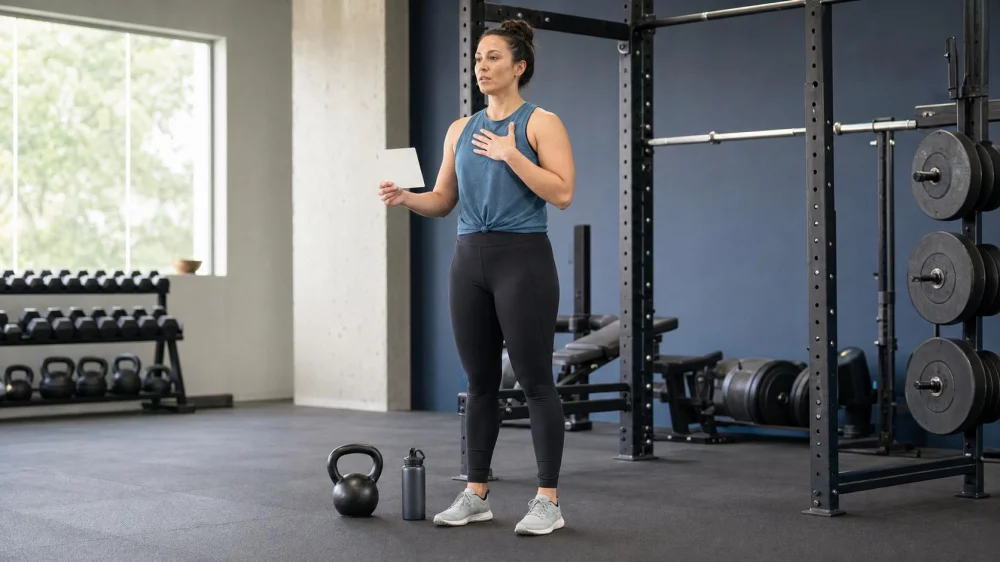
How to Use RPE to Adjust Your Workout Intensity
On this page
Quick answer
RPE, or rating of perceived exertion, is a 0–10 estimate of how hard an activity feels to you in the moment. Use breathing, muscle effort, technique and ability to speak—not discomfort alone—to choose a number. Keep most new training at a manageable effort, adjust one variable at a time, and stop for chest pressure, fainting, severe breathlessness, sudden weakness or sharp pain.

What RPE means
Rating of perceived exertion is a subjective measure of whole-body effort relative to your current capacity. Zero represents rest; 10 represents maximal effort you could not sustain.
RPE is useful because the same speed or weight can feel different with sleep, heat, altitude, stress, illness and training status. It complements pace, heart rate and load; it does not diagnose medical conditions or measure technique.

Yoga Flow Inc / yoga flow pittsburgh
PittsburghAllegheny CountyPennsylvania
250 Mt Lebanon Blvd, Pittsburgh, PA 15234, USA
A practical 0–10 RPE scale
- 0: resting.
- 1–2: very easy; relaxed conversation.
- 3–4: easy to moderate; controlled breathing and sustainable work.
- 5–6: moderate to challenging; focused but repeatable.
- 7–8: hard; limited duration and clear recovery needed.
- 9: very hard; near current limit.
- 10: maximal effort; rarely needed in general fitness.
The CDC describes relative moderate aerobic intensity around 5–6 on a 0–10 effort scale and vigorous intensity beginning around 7–8. Its talk test offers a second check: moderate effort generally allows talking but not singing, while vigorous effort limits speech to a few words before breathing.
Use RPE for cardio
- Warm up gradually at RPE 1–3.
- Set a target range appropriate to the session, not a single perfect number.
- Check after several minutes, once breathing and terrain stabilize.
- Adjust speed, incline, resistance or rest—not all at once.
- Recheck in heat, hills or late in the session.
- Cool down until breathing and movement feel controlled.
Best for steady training: a range you can hold with consistent form and expected speech. Not ideal for chasing: a high number just because a watch pace seems slow.
Use RPE for strength training
For a set of resistance exercise, RPE can reflect how close you finished to technical failure. One practical interpretation:
- RPE 5–6: several good repetitions clearly remained.
- RPE 7: roughly three quality repetitions may have remained.
- RPE 8: roughly two remained.
- RPE 9: roughly one remained.
- RPE 10: no additional repetition with acceptable technique.
Repetitions-in-reserve estimates improve with practice and vary by exercise. Beginners often benefit from ending sets with multiple clean repetitions available rather than testing failure.
Workout adjustment checklist
- Higher than planned: reduce load, pace, range, interval length or total sets; add recovery.
- Lower than planned: first confirm technique, then add a small amount of load, time or resistance.
- Technique changes: end the set even if cardiovascular effort feels low.
- Unusual fatigue: choose easier movement or recovery rather than forcing the written plan.
- Repeated mismatch: revise the plan's starting loads and recovery assumptions.
- Progress: compare similar sessions over weeks, not unrelated exercises or days.
Record exercise, load or pace, repetitions or duration, RPE and one context note such as sleep or heat. Avoid turning the log into a judgment of effort or character.
When to stop and seek help
Stop exercise for chest pressure or pain, fainting, severe or unusual shortness of breath, new confusion, sudden weakness, loss of coordination, severe headache, sharp pain or a suspected serious injury. Seek emergency care for urgent symptoms.
People with cardiovascular, lung, metabolic, neurologic or musculoskeletal conditions; pregnancy; recent surgery; or medicines affecting heart rate or balance may need individualized guidance. A qualified healthcare professional can set appropriate limits, and a credentialed trainer can help translate them into a program.
Evidence and scope notes
This guide uses general exercise-programming practice and current U.S. federal guidance on relative intensity and the talk test. The official CDC overview is available at measuring physical activity intensity.
RPE is not a calorie estimate, heart-rhythm assessment or guarantee of exercise safety. Pain is not required for a productive session, and a low RPE does not excuse unsafe technique.
Frequently asked questions
Is RPE the same as heart rate?
No. RPE is perceived effort; heart rate is a physiological measurement. They can be used together but may diverge with heat, stress, caffeine, medicine or device error.
Should every workout reach RPE 8 or higher?
No. Easy and moderate sessions support practice, recovery and sustainable volume. Hard work should match goals, experience and recovery.
When should I rate a strength set?
Rate it immediately after the set while effort and technique are fresh in memory.
Can beginners use RPE?
Yes, with conservative targets and coaching on technique. Accuracy improves as you learn what clean repetitions feel like.
What if the warm-up feels unusually hard?
Reduce intensity and reassess. Illness, heat, poor recovery or another issue may make an easier session or rest more appropriate.
Next steps
Choose one familiar workout and assign an intended RPE range to each section. Record actual effort and one context note, then adjust only one training variable. Use the talk test for cardio and technique quality for strength, and seek individualized advice when health conditions or warning symptoms apply.


 Burn Boot Camp4.0 (138 reviews)
 Pilates Hotties5.0 (38 reviews)
 Core Burn Pilates North Greenwich5.0 (1 reviews)
 Crunch Fitness - Cicero4.0 (180 reviews)
 Club Pilates4.0 (160 reviews)
 Gloveworx4.0 (35 reviews)
 The Best Full Body Workout Routine for Muscle Growth
 The Best Strength Moves to Improve Your Vertical Jump and Short-Distance Power This November
 How to Build Shoulder Health and Stability for Racket Sports and Lifting in Fall
 The Best Methods to Implement Progressive Overload Safely for Runners and Cyclists This Fall
 How to Stay Motivated in Your Gym: Tips for Consistent Fitness Progress
 How to Increase Muscle Endurance with Smart Training