
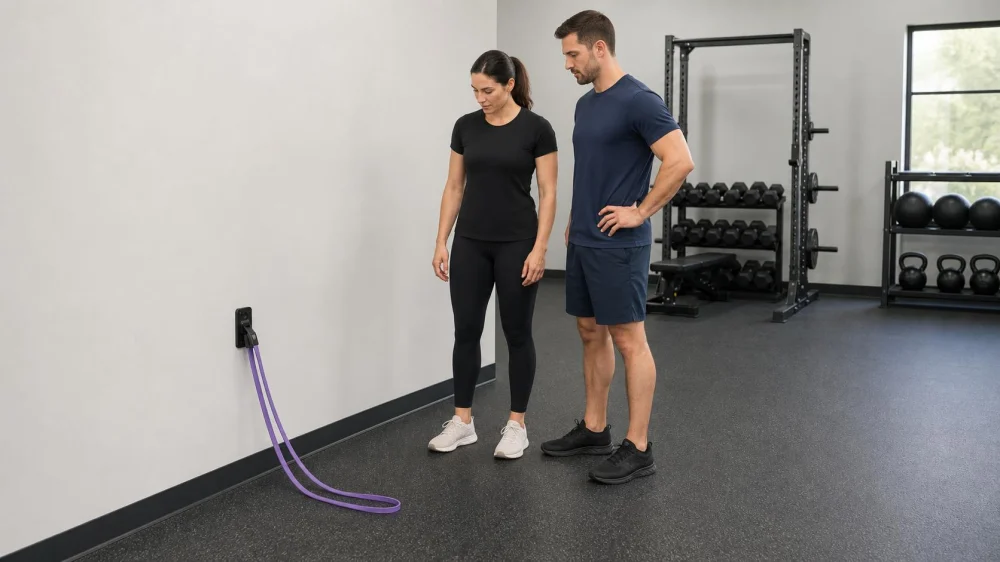
Resistance Band Check: Inspect, Anchor, and Keep Clear
On this page
Quick answer
Before each session, inspect the full band, handles, clips, stitching, and anchor for cuts, cracks, thinning, corrosion, or looseness. Use only a rated setup on a stable surface, keep the recoil path away from faces and bystanders, and begin with light tension. Stop immediately if the band slips, rolls, makes a new sound, or shows damage.

Hydrogen Fitness Greenwich / hydrogen fitness port chester
Port ChesterWestchester CountyNew York
11 Riverdale Ave, Port Chester, NY 10573, USA
Why elastic resistance needs a setup check
A stretched band stores energy and can recoil quickly if material, stitching, a clip, or an anchor fails. Wear can hide near handles and contact points, while heat, sunlight, chemicals, abrasion, age, and overstretching change elastic material. Body position and anchor height also alter force direction, balance demands, and the path a failed band could travel.
This guide is for adults using resistance bands in a United States gym or ordinary home exercise setting. It is not rehabilitation, medical, product-repair, or improvised-anchor advice. Follow the specific band and anchor instructions, gym rules, and guidance from an appropriately qualified professional when needed.

The Little Gym / little gym perinton ny
6720 Pittsford Palmyra Rd, Fairport, NY 14450, USA
Practical checklist
- Band type, marked resistance if present, age, storage history, manufacturer limits, intended stretch range, and exercise compatibility.
- The entire elastic surface under good light, including ends and folded areas, for cuts, cracks, thinning, flat spots, tackiness, discolouration, or exposed core.
- Handles, stitching, sleeves, carabiners, rings, clips, buckles, knots supplied by the maker, and every connection point.
- A purpose-designed anchor or approved machine point with the correct direction, height, closure, surface protection, and load rating.
- Floor traction, shoes, balance, nearby mirrors, windows, furniture, equipment, door travel, people, pets, and the recoil path.
- Starting posture, range, band slack, expected tension, breathing, fatigue, symptoms, and an easy way to end the set under control.
- Cleaning and storage instructions, inspection log for shared gear, and a clear method to remove damaged equipment from use.
Step-by-step plan
- Choose a band and exercise recommended for your current ability and the available anchor. Do not combine bands or improvise resistance without product guidance.
- Inspect the full band and every attachment while relaxed. Flex it only as the manufacturer permits and never test damage by stretching it toward your face.
- Confirm the anchor is intended for elastic exercise, fully secured, correctly oriented, and not attached to a movable, sharp, hot, fragile, or unknown object.
- Clear the exercise and recoil zones. Position your body so a slip or failure is less likely to strike the face, eyes, another person, glass, or equipment.
- Take up slack gradually, use a stable stance, and perform a few slow low-tension repetitions to verify tracking and control.
- Keep tension within instructions and avoid jerking, twisting the band around sharp edges, or extending beyond the stated limit.
- Release tension slowly, inspect any changed area, clean and store the band as directed, and quarantine damaged shared equipment so it is not reused.
For personal or shared gear, note the product, acquisition or in-service date if known, storage location, inspection date, wear location, exercise and anchor used, unusual slip or sound, and retirement decision. Photograph damage only while the band is relaxed and clearly label it out of service.
Limits and important notes
Do not tape, glue, knot, melt, trim, or otherwise repair damaged elastic unless the manufacturer provides a specific authorized method. Door hinges, handles, railings, furniture, trees, and heavy objects are not automatically suitable anchors. Colour is not a universal resistance standard across products.
Stop and remove the setup from use after a snap, slip, anchor movement, visible damage, or new attachment problem. Seek urgent medical evaluation for an eye strike, serious fall, severe pain, loss of function, head injury, or other concerning symptoms. Report defective gym equipment to staff before leaving the area.
Frequently asked questions
How often should I inspect a resistance band?
Check before every use and follow the product's deeper inspection and replacement schedule, especially for shared or frequently used gear.
Can I use a door as an anchor?
Only with a compatible purpose-designed system used exactly as instructed and with door direction, closure, structure, and bystander access controlled.
Is band colour a reliable resistance level?
No. Colour systems vary by brand and model, so use the specific product markings and instructions.
Can a small cut be taped?
Do not rely on tape for damaged elastic. Retire the band unless the manufacturer provides an approved repair method.
Where should I stand?
Use the instructed alignment and a clear stable area, keeping the likely recoil path away from the face, eyes, glass, and other people.
Sources and evidence
Use the current band, attachment, and anchor manufacturer instructions, gym equipment policy, inspection records, and guidance from a qualified fitness or rehabilitation professional. Product-specific resistance, stretch limits, anchoring, cleaning, storage, and replacement directions take priority over generic advice.
Conclusion and next steps
Inspect the relaxed band and every connection, use only a compatible secure anchor, clear the exercise and recoil paths, and test with light controlled tension. Retire questionable gear rather than patching it. A brief pre-use check protects the user, nearby people, and the consistency of the workout.





 Yakka Flex Fitness0.0 (0 reviews)
 NewBreed Fitness5.0 (2 reviews)
 Snap Fitness Norton4.0 (67 reviews)
 Frejuste Fitness4.0 (4 reviews)
 Daring Dog Yoga0.0 (0 reviews)
 Body In Motion Fitness4.0 (22 reviews)
 Best Pre-Workout Meals for Morning Runners Who Hate Eating Before Exercise
 How to Burn 500 Calories in a 45-Minute Workout Effectively
 The Best Beginner Leg Day Workout Plan for Strength and Growth
 How to Stay Motivated in Your Healthy Lifestyle – Tips for Long-Term Success
 Top 5 Strength Training Myths You Need to Know
 Gym Sauna After Exercise: Hydrate and Exit Early