
- 1 - What is Progressive Overload?
- 2 - Benefits of Progressive Overload Without a Gym
- 3 - Using Tempo to Increase Intensity
- 4 - Using Volume to Increase Intensity
- 5 - Real-Life Example: Progressive Overload in Action
- 6 - Recommendations from Hot Fitness for Home Workouts
1. What is Progressive Overload?
Progressive overload is the principle of gradually increasing the intensity of your workouts to continually challenge your body and promote strength and muscle growth. Traditionally, progressive overload is achieved by adding weight or increasing the number of repetitions in your exercises. However, you can still achieve progressive overload without access to a gym by utilizing other techniques such as tempo and volume.
Whether you're working out at home or in a gym, progressive overload is essential for continuous progress. By increasing the intensity of your workouts over time, your muscles are forced to adapt, which leads to greater strength, endurance, and muscle mass.
HUB Fitness / the village gym chandler az
14647 S 50th St Ste 181, Phoenix, AZ 85044, USA
2. Benefits of Progressive Overload Without a Gym
You don’t need a gym to experience the benefits of progressive overload. There are several advantages to implementing this principle with home workouts:

F45 Training Westford / f45 westford ma
WestfordMiddlesex CountyMassachusetts
174 Littleton Rd, Westford, MA 01886, USA
2.1 Builds Strength and Muscle Mass
Progressive overload stimulates muscle growth and strength gains, even if you're using bodyweight exercises or resistance bands. By increasing intensity through tempo or volume, you can challenge your muscles in new ways, leading to continual growth and strength improvement.
2.2 Flexibility and Convenience
The beauty of using progressive overload without a gym is that you can work out anywhere. Whether you're at home, in a park, or traveling, you can apply overload principles to your workouts without needing specialized equipment or gym memberships.
2.3 Helps Break Through Plateaus
One of the challenges in any fitness journey is breaking through plateaus. By utilizing progressive overload, you continuously challenge your body, which helps you avoid stagnation. Even without heavy weights, altering tempo and volume can create the intensity needed to push through plateaus.
3. Using Tempo to Increase Intensity
Tempo refers to the speed at which you perform each phase of an exercise. By manipulating the tempo, you can increase the intensity of your workout, creating more time under tension for your muscles, which is crucial for muscle growth and strength development.
3.1 What is Tempo Training?
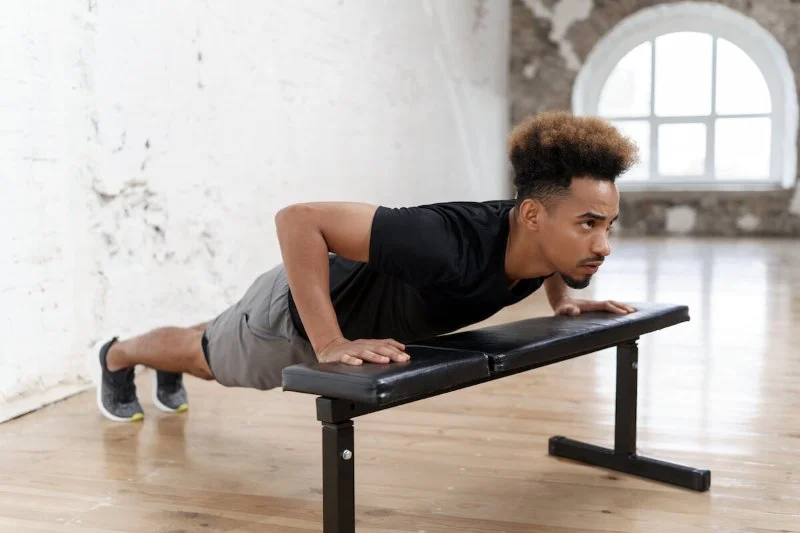
Tempo training involves slowing down certain portions of the movement to extend the time your muscles are under tension. For example, instead of quickly performing a push-up, you might slow down the lowering phase to 3-5 seconds, making the exercise more challenging without adding extra weight.
By controlling the tempo, you can target different aspects of muscle development. A slower tempo increases time under tension, which can lead to greater hypertrophy (muscle growth), while a faster tempo can improve explosive strength and power.
3.2 How to Apply Tempo to Your Workouts
To apply tempo training, consider the following guidelines:
Example 1: Squats
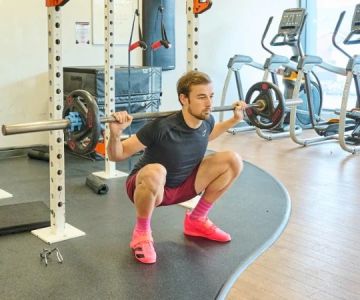
For squats, you can perform the following tempo: 3 seconds down, 1-second pause at the bottom, and 1 second up. This slow descent increases time under tension, which can lead to greater strength and muscle gains without using additional weights.
Example 2: Push-Ups
For push-ups, slow down the lowering phase to 3-5 seconds, then push back up at a normal pace. This increases the challenge of the exercise without requiring more reps or external equipment.
4. Using Volume to Increase Intensity
Volume refers to the total amount of work you perform in a given workout, typically measured as sets x reps. Increasing the volume of your workouts can be another way to apply progressive overload, even without access to a gym.
4.1 Why Volume Matters
Increasing volume provides additional work for the muscles, forcing them to adapt and grow. If you're not increasing weight, you can still make your workouts more challenging by adding more sets or reps. By increasing volume gradually, your muscles will continue to receive the stimulus needed for growth and improvement.
4.2 How to Apply Volume to Your Workouts
To use volume as a tool for progressive overload, here’s how you can increase the intensity:
Example 1: Bodyweight Squats
If you normally perform 3 sets of 15 squats, increase the volume by performing 4 sets of 20. This will increase the total work your muscles do during the workout, promoting strength and hypertrophy without adding any weight.
Example 2: Planks
Instead of holding a plank for 30 seconds, gradually increase the time you hold the plank. Start with 30 seconds and increase it by 5-second increments until you can hold it for 1-2 minutes. This increases the volume of the exercise, making it more challenging.
5. Real-Life Example: Progressive Overload in Action
Sarah, a 28-year-old woman, was looking for ways to build strength without a gym membership. She began incorporating tempo training and volume increases into her home workouts. By slowing down her squats and adding more reps, she quickly noticed improved muscle definition and strength, even without using weights. Over the course of several months, Sarah built the strength she desired by applying progressive overload through tempo and volume, and she continued to see results.
6. Recommendations from Hot Fitness for Home Workouts
At Hot Fitness, we provide expert advice and high-quality fitness products to help you achieve your fitness goals from the comfort of your home. If you’re looking to incorporate progressive overload into your routine, we recommend investing in resistance bands, bodyweight workout guides, and other home fitness essentials. Check out our website for the best resources to enhance your at-home workouts.
Visit Hot Fitness for more tips, workouts, and products that will help you increase intensity and reach your fitness goals at home!



 The Train Station - Tinley Park5.0 (31 reviews)
 YogaSix West Vancouver4.0 (47 reviews)
 DTSweat5.0 (11 reviews)
 Troy Gym 1 & 2 (Rec/PS Gymnastics/Ninja)3.0 (148 reviews)
 Orangetheory Fitness4.0 (229 reviews)
 Commuter Fitness4.0 (25 reviews)
 How to Build a Fall Prehab Routine That Prevents Running and Lifting Injuries
 Best Strength Exercises for Better Running Economy & Lower Effort This Fall
 How to Do HIIT Safely and Effectively: Essential Tips for Maximum Results
 Advanced Techniques for Better CrossFit Results
 How to Stay Motivated in Your Cardio Workouts: Tips and Strategies
 Best Pre-Workout Meals for Morning Runners Who Hate Eating Before Exercise