
How to Set Up a Weight Machine Before Your First Set
On this page
Quick answer
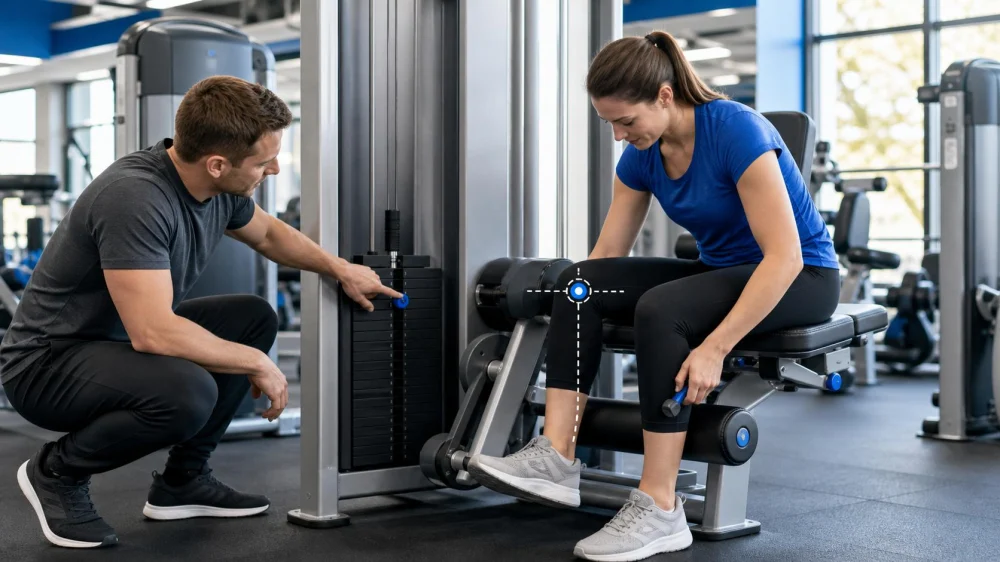
Before using a weight machine, read its diagram and warnings, inspect the seat, pads, cable, selector pin, handles, and range controls, then adjust the machine so its intended pivot and support points match your body. Select a light resistance, move slowly through a comfortable range, and stop if the setup shifts, the stack catches, or you feel sharp pain, numbness, dizziness, or joint pinching. Ask qualified gym staff for a demonstration when the machine is unfamiliar.
Adjustment marks are reference points, not proof of correct fit. Two people of similar height may need different settings.

F45 Training Mosaic District / f45 mosaic
2980 District Ave, Fairfax, VA 22031, USA
Read the machine instructions
Identify the exercise, intended body position, moving parts, adjustment handles, entry and exit method, and warnings. Confirm that the equipment is appropriate for your planned movement and current ability.
Look for a facility inspection tag if one is used. Do not operate a machine with a frayed cable, cracked upholstery exposing sharp edges, loose hardware, missing pin, damaged stop, unstable frame, or out-of-order notice. Report it rather than attempting a repair.

LA Fitness / la fitness chandler az
ChandlerMaricopa CountyArizona
3985 S Arizona Ave, Chandler, AZ 85248, USA
Adjust the contact points
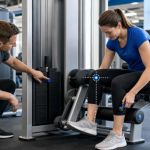
Set the seat and back support before choosing a working load. Position pads on the broad area shown by the manufacturer, not directly on a vulnerable joint. Align the machine's intended rotation point with the relevant joint as closely as the design and instructions require.
Place feet and hands securely without excessive reaching, wrist bending, shoulder elevation, or sliding. Engage every adjustment pin fully. If the machine cannot fit your limb length or comfortable range, choose a suitable alternative.
Test with light resistance
Set the selector pin completely through one plate and ensure no extra object is placed on the stack. Begin lighter than your expected working resistance. Move the handles or pads smoothly through a controlled, pain-free test range.
Check that the stack rises and lowers without striking, the cable tracks correctly, supports remain stable, and your joints do not feel forced at either end. Make one adjustment at a time, retest, and keep hands clear of pinch points.
Monitor position during the set
Maintain the supported posture and grip established during setup. Use controlled movement rather than bouncing, dropping the stack, or forcing beyond the machine's stops. Breathe normally unless a qualified professional has given specific instructions.
Stop the set when posture changes, range shortens unexpectedly, or you can no longer control the return. Do not reach toward the weight stack or adjustment mechanism while it is moving.
Exit and reset safely
Return the moving arm or platform to its resting position gently and wait until the stack is fully settled. Exit using the intended handles or step points. Reset attachments and remove personal items without changing equipment another person is using.
Record the machine model or location and your settings, because numbering can differ across machines. On the next visit, verify every setting again instead of assuming it was left unchanged.
Machine setup checklist
- Read the diagram, warnings, and facility rules.
- Inspect cable, pins, pads, stops, and frame.
- Adjust seat, back, pads, and range.
- Align intended joints and supports.
- Insert the selector pin fully.
- Test slowly with light resistance.
- Keep clear of pinch and moving zones.
- Return the machine under control.
Limitations and safety notes
- This guide cannot provide model-specific settings or assess an injury.
- Machine design does not make every exercise appropriate for every body.
- People with recent injury, surgery, chronic conditions, pregnancy, disability, or new symptoms may need individualized guidance.
- Stop for chest pressure, faintness, unusual severe breathlessness, sudden weakness, severe pain, or equipment failure and seek appropriate help.
- Never bypass safety stops or add improvised resistance.
Frequently asked questions
Should the pivot line up exactly with my joint?
Follow the manufacturer's diagram. Close alignment is commonly intended, but the design and exercise determine the correct reference.
Can I copy someone else's settings?
Use them only as a starting clue. Limb length, mobility, support needs, and machine models differ.
What if the lightest weight is too heavy?
Do not force it. Ask staff for an appropriate machine, band, bodyweight option, or other accessible alternative.
Why does the same number feel different?
Cable routing, lever arms, maintenance, plate calibration, and machine design differ. Compare effort within the same setup, not numbers alone.
Should I lock my joints at the end?
Use the controlled range shown by the manufacturer or qualified coach. Do not force a joint into a painful or unstable end position.
Sources and evidence notes
The National Institute of Diabetes and Digestive and Kidney Diseases advises making sure exercise equipment works and fits properly and notes the importance of proper lifting form. Current federal physical-activity guidance also recommends increasing activity gradually. These principles support inspection, fit, light testing, and controlled progression.
Save your setup without guessing
Ask gym staff to demonstrate one machine and watch your light test set. Record the exact machine plus seat, pad, and range settings in your workout log. Recheck the machine and fit every time before adding resistance.



 StretchLab4.0 (16 reviews)
 Flagship - Castro4.0 (94 reviews)
 SweatPack0.0 (0 reviews)
 Falk Recreation Center- Private facility(Einstein, Montefiore and Jacobi only)5.0 (14 reviews)
 Center Yoga4.0 (117 reviews)
 Absolutely Pilates0.0 (0 reviews)
 Best Practices for Running in Rain and Cold: Gear, Warm-Up and Shoe Choices
 The Best Strategies for Long-Term Consistency: Fall Habits That Keep You Fit Through Winter
 How to Use Short Threshold Intervals to Raise Your Sustainable Pace Over 8 Weeks
 How to Set Up a Weight Machine Before Your First Set
 How to Use Nighttime Recovery Rituals to Improve Sleep and Training Adaptation During Fall
 How to Create a Personalized 12-Week Strength Plan That Complements Your Running