
- Why Race-Specific Strength Workouts Are Essential for Fall Races
- How to Incorporate Strength Workouts into Your Fall Running Plan
- Targeting Key Muscles for Better Running Performance
- Real-Life Examples: How Strength Workouts Boosted Race Performance
- Hot Fitness Recommendations for Race-Specific Training
Why Race-Specific Strength Workouts Are Essential for Fall Races
As fall approaches, many runners begin increasing their training intensity and mileage in preparation for upcoming races. While running endurance is key to race success, incorporating race-specific strength workouts can significantly improve your performance and reduce the risk of injury. Whether you are preparing for a 5K, marathon, or trail race, strength training tailored to your race goals can lead to faster finishes and a more efficient running form.

CS Fit Pilates / cs fit pilates
Ho-Ho-KusBergen CountyNew Jersey
612 N Maple Ave, Ho-Ho-Kus, NJ 07423, USA
The Role of Strength in Race Performance
Strength training for runners often focuses on building power in the lower body and enhancing core stability. However, it’s essential to tailor your strength workouts to the specific demands of the race you’re training for. For example, long-distance races require endurance and muscular endurance, while shorter races may demand more explosive power. Incorporating strength exercises that mimic the movements and intensity of your target race will help you achieve better race-day results.

Anytime Fitness / anytime fitness villanova
VillanovaDelaware CountyPennsylvania
789 E Lancaster Ave, Villanova, PA 19085, USA
How to Incorporate Strength Workouts into Your Fall Running Plan
Integrating race-specific strength workouts into your training plan is essential for enhancing your race performance this fall. Here’s how to build a balanced strength program that aligns with your race goals:
1. Start with Functional Strength Training
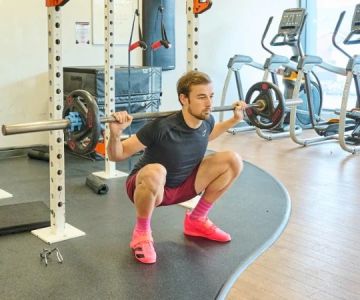
Functional strength training involves exercises that mimic the motions of running, helping to improve your running form and prevent injuries. Focus on compound exercises that work multiple muscle groups at once, such as squats, lunges, deadlifts, and step-ups. These exercises help build lower body strength and enhance your ability to push through the challenges of a race.
2. Include Explosive Power Movements
For races that require bursts of speed, such as sprints or hill climbs, incorporating plyometric exercises into your strength routine is crucial. Exercises like box jumps, jump squats, and bounds increase your explosive power, helping you perform at peak capacity during the race’s most challenging moments.
3. Incorporate Core Strength for Stability
Strong core muscles are essential for maintaining good posture and stability during your run, particularly over longer distances. Incorporate exercises like planks, side planks, leg raises, and Russian twists to strengthen the muscles in your abdomen and lower back. A strong core also improves your balance, preventing fatigue from affecting your running form.
Targeting Key Muscles for Better Running Performance
Race-specific strength workouts should target muscles that play a significant role in your running form and efficiency. Here’s how to target key areas of your body:
1. Glutes and Hamstrings
The glutes and hamstrings are critical for driving your stride, particularly during hill climbs or sprinting phases of a race. Strengthening these muscles helps prevent muscle fatigue and reduces the risk of hamstring strains. Effective exercises for the glutes and hamstrings include hip thrusts, deadlifts, glute bridges, and hamstring curls.
2. Quads and Calves
Strong quads and calves help you power through the pushing phase of each stride. This is especially important for maintaining your pace during long races or when navigating steep terrain. Squats, calf raises, and leg presses will help build strength in these muscles and improve your efficiency while running.
3. Core Muscles
A strong core stabilizes your body, which is crucial for maintaining good form, reducing fatigue, and preventing lower back pain. Add exercises like planks, flutter kicks, and leg lifts to your routine to strengthen your abs, obliques, and lower back. A stable core also improves your posture, which translates to better running efficiency.
Real-Life Examples: How Strength Workouts Boosted Race Performance
Many runners have seen significant improvements in their race performance by incorporating race-specific strength training. Take, for example, marathoner Jane Smith, who struggled with knee pain during long-distance races. By incorporating squats, lunges, and calf raises into her training, she was able to build strength in the muscles that support her knees. This resulted in a more efficient stride and reduced pain during her runs.
Similarly, sprinter Tom Garcia focused on explosive power exercises, such as box jumps and jump squats, to improve his speed during short races. After several months of incorporating these movements into his routine, he was able to reduce his 100-meter time significantly, showcasing the direct impact of strength training on his sprinting performance.
Hot Fitness Recommendations for Race-Specific Training
If you’re looking to enhance your race-specific strength workouts, visit Hot Fitness for top-quality gear and equipment. From resistance bands and kettlebells to foam rollers and recovery tools, we have everything you need to take your training to the next level. Whether you’re training for a marathon, 5K, or trail race, our products will help you build the strength, agility, and endurance you need to perform your best on race day.



 StretchLab5.0 (44 reviews)
 N Motion Fitness Studio For Women5.0 (18 reviews)
 Club Pilates4.0 (21 reviews)
 Body Boost5.0 (31 reviews)
![[solidcore] Grand Central](https://img.hotfitness.net/d29/2509/226811704599801_150x150.webp) [solidcore] Grand Central3.0 (26 reviews)
[solidcore] Grand Central3.0 (26 reviews) HOTWORX - Evansville, IN (North Burkhardt)4.0 (14 reviews)
 The Best Low-Impact Strength Moves for Muscle Growth in Fall
 Beginner’s Guide to Muscle Gain: Start Building Muscle Like a Pro
 Science-Backed Tips for Improving Your Muscle Gain
 How Home Workouts Can Transform Your Body: Benefits and Tips
 The Best Methods to Combine Strength, Mobility, and Cardio Into a Single 45-Minute Session
 The Best Warm Clothing Choices for Early Morning Runs Without Sacrificing Breathability