
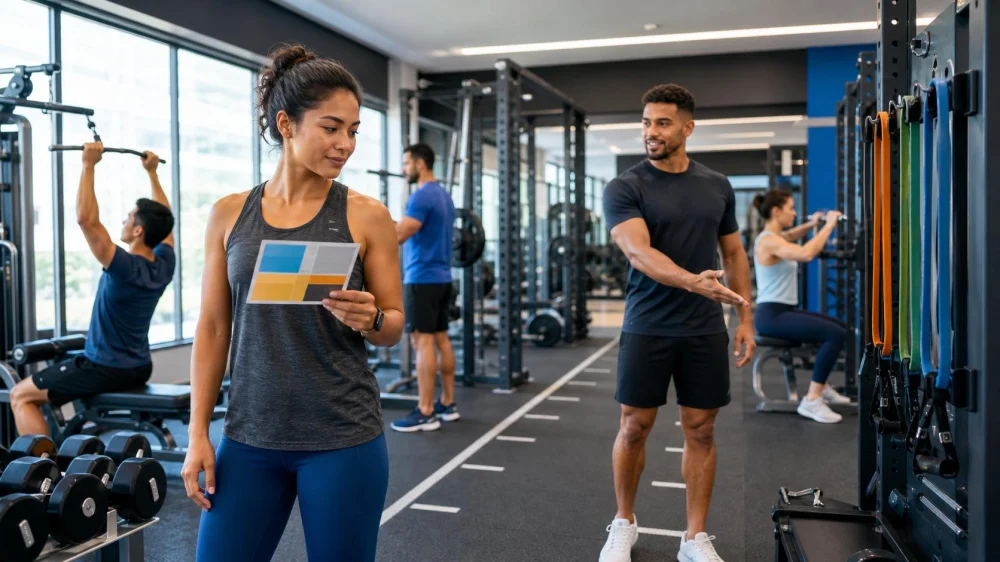
How to Adjust Your Workout When the Gym Is Crowded
On this page
Quick answer
Before a busy gym session, choose two or three movement priorities and prepare one familiar substitute for each. If equipment is occupied, keep the same broad movement pattern and target muscles, use a load and setup you already control, and adjust sets or repetitions rather than copying the original weight. Avoid saving multiple stations, rushing equipment setup, or trying an unfamiliar advanced exercise solely because it is available.
A slightly simpler workout completed with good control is more useful than a chaotic plan that creates unsafe loading or long waits.
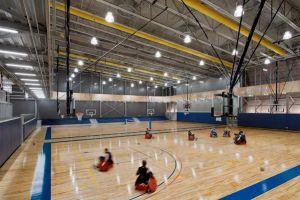
Ability360 Sports & Fitness Center / ability 360 center
5031 E Washington St, Phoenix, AZ 85034, USA
Define the session priorities
Separate essential movements from optional accessories. For example, a session might prioritize one squat or leg-press pattern, one push, one pull, and then optional smaller exercises. If a specific movement is part of rehabilitation, sport practice, or coached technique, follow that professional plan rather than substituting freely.
Choose a session time limit and decide in advance what can be shortened. Keep your normal warm-up, but perform it in a low-traffic area without blocking walkways or equipment.
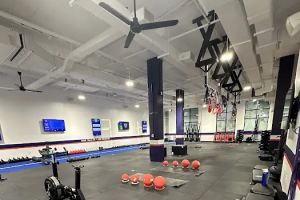
F45 Training Bogota / f45 training bogota
1000 W Fort Lee Rd Suite 3, Bogota, NJ 07603, USA
Choose substitutions by function
Compare the movement pattern, muscles used, stability demand, range of motion, grip, and skill level. A machine chest press and dumbbell press both involve pushing, but they do not require identical stabilization or use the same load.
Use familiar alternatives: a cable row for another supported row, goblet squat for a machine-based squat pattern, or a resistance band for a familiar cable accessory when allowed. Reduce resistance and rehearse the movement if the setup or implement changes. Ask qualified gym staff how equipment operates.
Build a low-conflict workout flow
Scan the room once, select the first available priority station, and group exercises by area only when doing so does not reserve several items. Perform accessories while waiting, or complete the main work in a different order if fatigue will not make a later lift unsafe.
Avoid carrying weights across crowded paths. Keep bags out of walkways, return equipment promptly, and leave enough room around moving cables, benches, platforms, and other users.
Share space and equipment safely
Ask how many sets remain and whether working in is practical. Match the gym's policy and communicate before changing pins, plates, bench position, safety stops, or attachments. Reset equipment for the other person and clean contact surfaces according to facility rules.
Do not interrupt someone during a set, step into a lifting area, or stand close to a moving weight. A spotter should understand the exercise and agreed signal; when uncertain, choose a safer setup or lower load.
Track changes without chasing numbers
Record the substitute, resistance, sets, repetitions, and perceived effort separately from the planned exercise. Do not assume machine weight stacks or exercise variations are directly comparable.
Keep intensity appropriate to your current ability. The CDC recommends starting slowly and building toward more time or more challenging activity. A crowded room is not a reason to make a sudden jump.
Crowded-gym checklist
- Pick two or three session priorities.
- Prepare one familiar alternative for each.
- Keep warm-up and safe technique.
- Reduce load when the setup changes.
- Use one station at a time.
- Protect walkways and moving-equipment zones.
- Record substitutions separately.
- Stop for concerning symptoms or unsafe conditions.
Limitations and safety notes
- This guide does not prescribe exercises, loads, or a medical training plan.
- People with chronic conditions, disabilities, pregnancy, recent injury, or new symptoms may need individualized guidance.
- Chest pressure, severe shortness of breath, faintness, sudden weakness, or severe pain requires stopping and appropriate medical help.
- Facility rules and equipment instructions control use.
- Do not imitate an exercise you cannot set up and perform confidently.
Frequently asked questions
Is changing exercise order okay?
Often, but fatigue and skill matter. Keep technical or high-priority work early unless a qualified coach recommends another order.
Should I use the same weight on a substitute?
No. Equipment, leverage, stability, and range differ. Start lighter and judge the new movement on its own.
Can I reserve two machines for supersets?
Follow gym rules and consider demand. During busy periods, one station at a time is usually more considerate.
What if every alternative is unfamiliar?
Ask staff for help, do a familiar low-risk activity, or shorten the session. Do not experiment under pressure.
Does a shorter workout still count?
Yes. Federal guidance notes that any amount of physical activity can provide benefit; consistency matters more than one perfect session.
Sources and evidence notes
Current CDC guidance encourages choosing activities that match abilities, starting slowly, and progressing gradually. The National Institute of Diabetes and Digestive and Kidney Diseases also advises using equipment that works and fits properly and emphasizes proper lifting form. These principles support familiar substitutions and controlled loading.
Create an A and B plan
For your next session, write the three priority movements in Plan A. Beside each, add one familiar Plan B alternative and a conservative starting resistance. At the gym, select the first safe available option and record what you actually did.



 Danville Optimist Youth Soccer Club4.0 (4 reviews)
 True Pilates4.0 (7 reviews)
 Burn Boot Camp4.0 (71 reviews)
 Yoga Flow SF - Union4.0 (69 reviews)
 Quintons Corner4.0 (43 reviews)
 Flip Dog Pilates5.0 (24 reviews)
 How to Use Nighttime Recovery Rituals to Improve Sleep and Training Adaptation During Fall
 Best Warm Clothing Choices for Early Morning Runs Without Sacrificing Breathability
 Resistance Band Glute Workouts to Improve Running Power and Prevent Injuries
 The Ultimate Home Workout Routine: Stay Fit and Healthy at Home
 Muscle Recovery Tips to Prevent Soreness and Fatigue
 How to Build a Fall Prehab Routine That Prevents Running and Lifting Injuries