
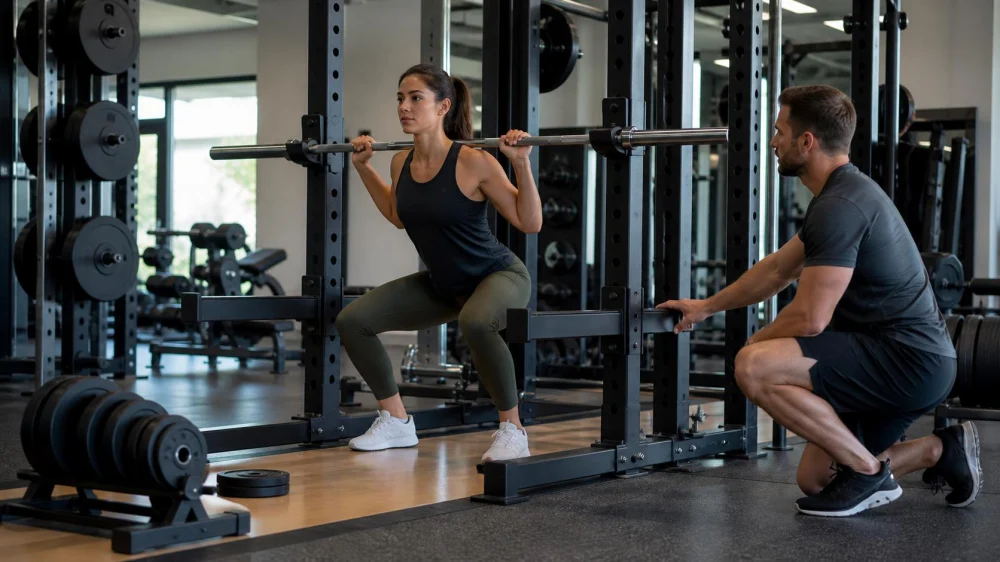
Gym Warm-Up Sets: Build Load Without Wasting Energy
On this page
Quick answer
Warm-up sets should rehearse the exercise, check readiness, and bridge from easy movement to the planned work weight without causing fatigue. Begin light, increase load in sensible steps, and reduce repetitions as the weight rises. Use more preparation for the first heavy compound lift and less for later similar movements. Stop if pain, dizziness, or unusual symptoms appear.

SWEAT440 Fitness Ocean Township / sweat440 ocean
Ocean TownshipMonmouth CountyNew Jersey
1607 NJ-35 Suite 2, Oakhurst, NJ 07755, USA
What warm-up sets do
A useful warm-up raises attention and tissue temperature, rehearses technique, lets you test the equipment, and helps estimate how the planned load feels today. It is not a workout before the workout.
The number of sets depends on training age, first exercise, load, temperature, time away from lifting, previous activity, and individual needs. A fixed formula cannot fit every session.

The Little Gym / little gym perinton ny
6720 Pittsford Palmyra Rd, Fairport, NY 14450, USA
Start with general movement
Some people benefit from several minutes of easy cycling, walking, rowing, or another low-intensity activity, particularly after sitting or in a cool environment. The goal is to feel warmer, not tired.
Follow with movement that matches the session. For squats, this might include controlled bodyweight squats and ankle or hip movements. For pressing, it may include easy shoulder and upper-back movement. Avoid long, exhausting circuits that reduce performance.
Ramp toward the work weight
Begin with the empty implement or a light load you can control. Increase weight over several steps while keeping technique consistent. The final warm-up should feel relevant to the work set without becoming a grind.
- Use smaller jumps when loads are heavy or technique is complex.
- Use fewer steps for light isolation work.
- Add a step when the first loaded set feels unexpectedly stiff.
- Repeat or reduce a load when setup or form is uncertain.
- Never make a large jump only because the gym is busy.
Manage reps and fatigue
Early light sets can use enough repetitions to rehearse motion. As weight approaches the work load, use fewer repetitions. Warm-up sets should generally stay well away from failure.
Rest long enough to change plates, reset equipment, and feel ready. Heavy final warm-ups may need more recovery than light first sets. Breathing, grip, and focus should be settled before a demanding attempt.
Adjust by exercise
The first compound lift usually needs the most preparation. Later exercises for the same muscles may need only one or two light checks because the body is already warm. A new movement pattern, machine setup, or painful history may justify more rehearsal.
Power exercises and very heavy lifts require skill and coaching. Beginners should prioritize a manageable load and consistent technique rather than copying an advanced lifter's ramp.
Use readiness signals
During each set, check balance, range of motion, bar path, speed, breathing, joint comfort, and mental focus. A load that is normally easy may feel different after illness, poor sleep, heat, stress, or time away.
Reduce the day's target or change the exercise if technique worsens or pain appears. Stop and seek medical help for chest pain, fainting, severe shortness of breath, sudden weakness, or another emergency warning sign.
Common mistakes
- Skipping directly from empty bar to a near-maximal load.
- Doing so many light repetitions that target muscles fatigue.
- Turning every warm-up into a speed test.
- Ignoring equipment height, safeties, collars, and floor clearance.
- Copying percentage tables that do not match the person or exercise.
- Continuing through sharp, changing, or unexplained pain.
Flexible checklist
- Complete easy general movement if useful.
- Set the rack, bench, machine, safeties, and plates.
- Perform a very light technique set.
- Add load gradually and lower reps as weight rises.
- Use the last warm-up to confirm today's plan.
- Rest before the first work set.
- Adjust load when readiness does not match expectations.
Important limitations
This article is general fitness education for healthy adults, not individualized exercise or medical advice. Injury, pregnancy, disability, cardiovascular disease, medication, surgery, and other conditions may require clinician or qualified exercise-professional guidance.
Sources and evidence notes
- American College of Sports Medicine 2026 resistance-training position stand: emphasizes individualized, goal-matched training and consistency over unnecessary complexity.
- National Strength and Conditioning Association: exercise-technique, preparation, and resistance-training education.
- U.S. Physical Activity Guidelines: broader context for gradually building physical activity and strength work.
- Qualified coaches and clinicians: appropriate for technique, injury, and health-specific modification.
Frequently asked questions
Do warm-up sets count as training volume?
They create some work, but programming usually distinguishes them from challenging work sets. Track them if fatigue or total workload matters.
Should I warm up every exercise?
Check setup and technique every time. Later similar exercises may need fewer formal ramp sets than the first major movement.
How heavy should the last warm-up be?
Heavy enough to prepare you for the work set, but not so hard that it reduces performance. Experience and coaching guide the exact choice.
Can stretching replace warm-up sets?
No. Mobility work may help a specific need, but loaded rehearsal prepares the exact exercise and equipment setup.
Conclusion
Good warm-up sets are specific, progressive, and economical. Start light, build load while repetitions fall, monitor readiness, and save effort for work sets. Let the first demanding exercise receive the most preparation, then adjust the rest of the session to the movement, goal, and how you feel today.



 Trinity Wellness Emporium5.0 (10 reviews)
 Jazzercise5.0 (6 reviews)
 Whitehall Club4.0 (33 reviews)
 Double Iris Yoga and Massage, LLC | Shepherdstown5.0 (37 reviews)
 Direct Fitness5.0 (9 reviews)
 Touchstone Pilates4.0 (24 reviews)
 The Best Cardio for Busy People: Quick and Effective Workouts for a Healthy Lifestyle
 10 Common Mistakes to Avoid in Yoga: Expert Tips for a Safe Practice
 Why Recovery Tools (Percussion Guns, Compression Boots) Matter More in 2025
 How to Build a Post-Race Return Plan So You Come Back Stronger and Injury-Free This Fall
 How to Burn More Fat with Compound Exercises: Effective Fat-Burning Workouts
 How to Do Muscle Gain Safely and Effectively