
Gym Rest Periods: Match the Goal, Load, and Exercise
On this page
Quick answer
Rest long enough to perform the next set with the technique, speed, and effort your goal requires. Heavy compound lifts and strength work generally need more recovery; lighter isolation or endurance work may use less. Treat the clock as a guide, then check breathing, focus, and muscle readiness. Extend rest when form or performance would otherwise break down.

Planet Fitness / planet fitness manchester ct
ManchesterCapitol Planning RegionConnecticut
346 Middle Turnpike W, Manchester, CT 06040, USA
Why rest periods matter
Between-set rest allows energy systems, breathing, grip, and concentration to recover. Too little rest can reduce repetitions, load, velocity, and technique. More rest may preserve performance but lengthens the workout.
There is no universally best interval. Exercise selection, training goal, load, proximity to fatigue, age, conditioning, heat, sleep, and health all influence readiness.

Fitometry Health Club / fitometry reviews
RidgewoodBergen CountyNew Jersey
129 S Broad St, Ridgewood, NJ 07450, USA
Strength and heavy sets
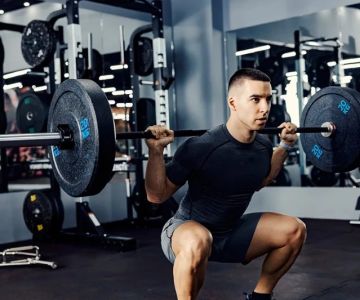
Heavy sets require high force and technical focus. Longer rest often helps lifters repeat high-quality performance. This is especially important for squats, presses, deadlifts, Olympic-lift variations, and challenging multi-joint exercises.
Do not rush because another person is waiting. Agree to work in, unload safely, or communicate how many sets remain. The next set should begin only after the platform and equipment are ready.
Muscle-focused training
Hypertrophy training can work across a range of loads and rest intervals. The practical goal is enough recovery to complete useful volume with consistent range of motion and effort. Very short rest may force load or repetitions down before the target muscles receive the planned work.
Track whether later sets collapse in repetitions or technique. If they do, add rest, reduce load, or change total sets rather than assuming discomfort alone drives growth.
Local muscular endurance
Endurance-focused sets often use lighter loads, more repetitions, and shorter rest, but technique still matters. Circuits also create cardiovascular demand, so equipment order and transitions must be planned.
Stop for chest pain, fainting, severe breathlessness, sudden weakness, or other emergency symptoms. Lightheadedness is not a target.
Compound and isolation exercises
A set of heavy squats generally creates more whole-body fatigue than a set of calf raises. Large compound movements often need longer rest than small isolation exercises. Unilateral exercises require care: resting only after both sides can leave the second side consistently more fatigued.
Supersets save time but combine fatigue. Pair exercises that can be performed safely, preserve equipment etiquette, and allow the target goal to remain achievable.
Use a readiness check
- Breathing is controlled enough for the exercise.
- Grip and bracing feel reliable.
- The planned technique can be repeated.
- Focus has returned.
- The rack, bench, plates, and safeties are correct.
- No sharp pain, dizziness, or unusual symptom is present.
If the clock ends before readiness returns, rest longer or modify the next set. If you are ready much earlier and the goal allows it, you may begin without waiting for an arbitrary timer.
Manage time in a busy gym
- Use a phone timer without occupying it for unrelated scrolling.
- Let others work in when plate changes and setup are practical.
- Keep the area clear during recovery.
- Prepare collars or small plates without blocking another station.
- Use alternate exercises rather than cutting rest to unsafe levels.
Do not reserve several machines for a circuit during peak hours unless gym rules allow it.
Common mistakes
- Using the same rest for every exercise and goal.
- Starting while still unable to brace or focus.
- Taking long rest but losing track of setup and warm-up.
- Cutting rest to make every workout feel harder.
- Comparing intervals with a lifter using different loads or objectives.
- Ignoring heat, illness, medication, or poor recovery.
Important limitations
This article is general fitness education for healthy adults, not a personalized training or medical prescription. Cardiovascular, metabolic, neurological, or musculoskeletal conditions; pregnancy; medications; and return from injury may require clinician and qualified exercise-professional guidance.
Sources and evidence notes
- American College of Sports Medicine 2026 resistance-training position stand: current evidence emphasizing goal-specific, individualized training and consistency.
- National Strength and Conditioning Association: resistance-training program design and exercise technique resources.
- Peer-reviewed resistance-training reviews: rest interval affects performance, volume, and adaptations, with context-dependent results.
- Qualified exercise professionals: appropriate for individualizing load, rest, exercise selection, and progression.
Frequently asked questions
Is one minute of rest enough?
It may be for some light sets but not for every goal or exercise. Judge the next set's required quality and your readiness.
Does longer rest reduce muscle growth?
Not automatically. Longer rest can preserve load and volume. Muscle growth depends on the overall program, effort, recovery, and consistency.
Should I rest between warm-up sets?
Yes, as needed. Early light sets may need little time, while heavier final warm-ups may require more recovery.
Can supersets replace rest?
They shift rest to another movement and can save time, but they also combine fatigue. Choose pairings that preserve safety and the session goal.
Conclusion
Rest periods should support the next set, not serve as a rigid badge of effort. Heavy, technical work usually earns more recovery; lighter work may need less. Use a timer for consistency, then verify breathing, focus, technique, and equipment before starting. Adjust the interval to the goal and the person.


 Trinity Wellness Emporium5.0 (10 reviews)
 Jazzercise5.0 (6 reviews)
 Whitehall Club4.0 (33 reviews)
 Double Iris Yoga and Massage, LLC | Shepherdstown5.0 (37 reviews)
 Direct Fitness5.0 (9 reviews)
 Touchstone Pilates4.0 (24 reviews)
 The Best Cardio for Busy People: Quick and Effective Workouts for a Healthy Lifestyle
 10 Common Mistakes to Avoid in Yoga: Expert Tips for a Safe Practice
 Why Recovery Tools (Percussion Guns, Compression Boots) Matter More in 2025
 How to Build a Post-Race Return Plan So You Come Back Stronger and Injury-Free This Fall
 How to Burn More Fat with Compound Exercises: Effective Fat-Burning Workouts
 How to Do Muscle Gain Safely and Effectively