
Gym Bag Hygiene: Separate Sweat, Shoes, Bottles, and Gear
On this page
A gym bag moves between locker-room floors, car seats, benches, home surfaces, and workout spaces. Inside it, damp clothes, towels, shoes, bottles, straps, snacks, and electronics can share a small enclosed area. The most useful hygiene habit is simple: separate clean items from used items, then empty and dry the bag promptly.
You do not need harsh disinfectants or a new bag after every session. Choose washable containers, follow manufacturer care instructions, and use ordinary laundering and cleaning methods. If an item is contaminated with blood, vomit, sewage, a chemical, or another unusual hazard, follow facility guidance and appropriate professional or public-health advice.

World Gym Fulton / world gym fulton ny
958 W 1st St S, Fulton, NY 13069, USA
Start with a washable bag
Choose a bag that opens widely, has smooth accessible compartments, and can be cleaned under its label instructions. A removable base, light-colored lining, ventilated shoe area, and washable wet pouch can make spills and dirt easier to find.
Inspect seams, zippers, straps, coating, and padding. A torn lining can trap debris, while a damaged zipper may spill belongings in a public area. Avoid a bag so large that damp items remain forgotten under layers of unnecessary gear.

Planet Fitness / planet fitness fresh meadows
61-09 190th St, Fresh Meadows, NY 11365, USA
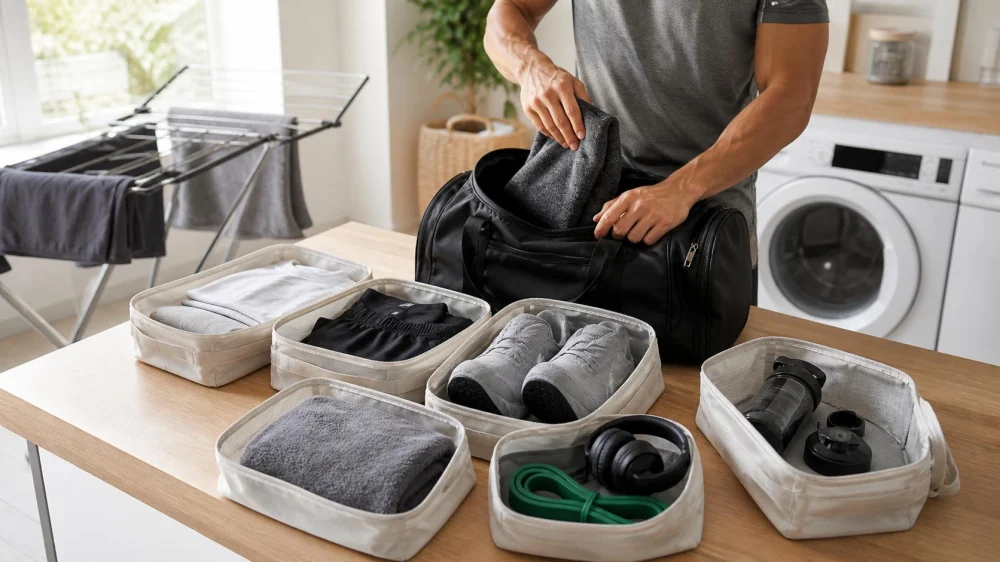
Create clean and used zones
Assign one compartment or packing cube to clean clothes, towels, and personal items. Use a separate washable or wipeable pouch for used clothing. Keep food, medicines, and electronics apart from liquids and damp gear.
Color-coded pouches can help without written labels, but use the same meaning every time. Do not return a used item to the clean zone during a rushed change. If the bag has only one compartment, use separate containers rather than loose plastic that tears easily.
Contain sweaty clothing
After training, place used clothes in a breathable washable pouch for a short journey or a leak-resistant wet bag when moisture must be contained. Neither is intended for long storage. Remove the contents as soon as you reach home.
Launder clothing according to its care label with suitable detergent and dry it fully. Do not leave a tied bag in a hot vehicle or hamper for days. If a garment retains odor after correct washing and drying, review fabric care, detergent amount, machine cleanliness, and whether the item needs replacement.
Separate shoes and floor contact
Gym shoes contact floors, mats, sidewalks, and restroom areas. Keep them in a dedicated compartment or washable shoe bag. Do not place soles against clean clothes, bottle mouthpieces, towels, or snacks.
After use, remove shoes, loosen laces, take out removable insoles when permitted, and let everything dry in a ventilated place away from direct high heat. Brush off dry debris and clean under the manufacturer instructions. Do not seal damp shoes inside the gym bag between visits.
Clean water bottles correctly
Keep the drinking surface protected from shoes and shared surfaces. Do not let the bottle mouth touch a public refill spout. Avoid sharing bottles, and discard water that has sat warm for an extended period rather than repeatedly topping it up.
At home, disassemble the lid, straw, valve, gasket, and bite piece as the manufacturer directs. Wash all reachable parts with suitable soap and water or use the dishwasher only when labeled safe. Rinse and air-dry completely before reassembly; trapped moisture can remain beneath seals.
Manage towels and shower items
Use separate towels for equipment, face, body, or shower as needed, and do not place a used cleaning towel on a bench and then on your face. Fold the clean towel inside its compartment and move it to the used pouch after contact with sweat or shared surfaces.
Carry soap, shampoo, and lotion in closed leak-resistant containers. Let shower sandals dry outside the bag and keep their soles away from towels. Do not leave a wet towel wrapped around bottles, razors, or electronics.
Wipe personal workout gear
Follow product instructions for belts, wraps, straps, bands, gloves, heart-rate monitors, mats, headphones, and protective equipment. Remove visible soil first, then use a compatible cleaning method. A strong disinfectant can damage rubber, leather, foam, adhesives, sensors, or skin-contact finishes.
Do not spray electronics directly or soak equipment not designed for it. Give each item enough open-air drying time before packing. Inspect resistance bands, straps, and protective gear for cracks, fraying, stretched seams, or damaged fasteners while cleaning.
Empty the bag after every visit
Make unpacking part of the workout routine. Remove clothes, towels, shoes, bottle, food, trash, and damp accessories. Check small pockets for tissues, tape, snack wrappers, used bandages, or leaking toiletries.
Wipe spills promptly and leave compartments open to dry. Restock only after clean items are ready. A bag stored open in a dry ventilated area is less likely to develop persistent odor than one zipped shut immediately after use.
Wash and dry the bag
Read the care label before machine washing, soaking, or using a product. Empty and vacuum loose debris, remove supported inserts, and pre-clean spills. Use a compatible mild cleaner on the specified materials.
Rinse away cleaner and dry every pocket, seam, strap, and base completely. High dryer heat can damage foam, coatings, reflective material, or glued construction. Do not put a damp bag back into a closed locker or car trunk.
Know when to replace an item
Replace bottles with damaged mouthpieces, deeply scratched interiors, persistent residue, or parts that cannot be cleaned. Retire a wet pouch with cracked coating, a shoe bag with holes, or a gym bag with exposed sharp hardware and uncleanable contamination.
Persistent odor alone does not identify a health hazard, but it signals that moisture or residue remains. If correct cleaning and drying do not solve it, replacement can be more practical than applying perfumes or increasingly harsh chemicals.
Gym bag hygiene checklist
- Choose a bag and pouches that can be cleaned and dried.
- Keep permanent clean, used, shoe, and liquid zones.
- Remove sweaty clothing immediately after returning home.
- Dry shoes and insoles outside the bag.
- Disassemble, wash, and air-dry the bottle and lid.
- Separate face, equipment, and shower towels.
- Clean personal gear under product instructions.
- Empty every pocket after each visit.
- Wash the bag periodically and dry all seams fully.
- Replace damaged or uncleanable items instead of masking odor.
A hygienic gym bag is an organized transition between workout and home. Separate what is clean from what touched sweat or floors, unpack immediately, wash bottles and clothing, and let every item dry before repacking. That routine takes less time than deep-cleaning a forgotten damp bag and keeps the next workout's gear ready to use.

 Franklin Square Outdoor Gym5.0 (1 reviews)
 Glenbard West Biester Field House4.0 (43 reviews)
 One More Round Boxing Club0.0 (0 reviews)
 The Iron Hive5.0 (134 reviews)
 Pilates Haven4.0 (28 reviews)
 Pvolve Potomac0.0 (0 reviews)
 How to Adjust Your Workout When the Gym Is Crowded
 10 Mistakes to Avoid in Strength Training
 Beginner's Guide to Workout: Get Started on Your Fitness Journey
 How to Increase Strength With a Simple 4-Day Workout Split
 The Best Ways to Keep Motivation High When the Days Get Shorter This Late Fall Season
 How to Do Nutrition Safely and Effectively for Optimal Health