
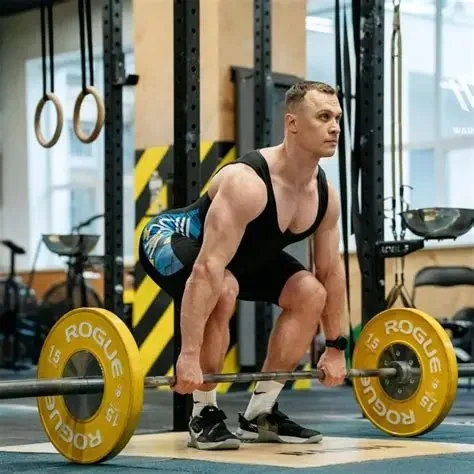
Mastering Deadlift Form: Techniques for Safety and Strength
- 1 - Importance of Deadlift Form
- 2 - Setup and Foot Position
- 3 - Grip and Hand Placement
- 4 - Spinal Alignment and Posture
- 5 - Lifting and Lowering the Bar
- 6 - Breathing and Bracing Techniques
- 7 - Common Mistakes to Avoid
- 8 - Deadlift Variations for Strength
- 9 - Progressive Overload and Weight Selection
- 10 - Injury Prevention Tips
- 11 - Real-Life Success Stories and Tips
- 12 - Finding Professional Guidance and Resources
1 - Importance of Deadlift Form
Deadlifts are among the most effective compound exercises, targeting multiple muscle groups including the hamstrings, glutes, lower back, and core. However, improper form can lead to serious injury. Understanding correct posture, lift mechanics, and controlled movement is essential for both safety and maximizing strength gains.

Douglasville Gymnastic & Cheerleading / douglasville gymnastic & cheerleading
DouglasvilleDouglas CountyGeorgia
8877 Bright Star Rd, Douglasville, GA 30134, USA
2 - Setup and Foot Position
Begin with feet hip-width apart, toes slightly pointing outwards. Ensure that the barbell is positioned over the mid-foot, allowing balanced leverage during the lift. Proper foot alignment creates a stable base and engages the right muscles effectively.

Yoga Lounge & Barre / yoga hudson ohio
89 First St #207, Hudson, OH 44236, USA
3 - Grip and Hand Placement
Hand placement depends on the type of deadlift. Standard grip involves hands just outside the knees, using either a double overhand or mixed grip. Grip strength and positioning are critical to maintain control of the bar and prevent slippage, especially as weight increases.
4 - Spinal Alignment and Posture
Maintain a neutral spine throughout the lift. Avoid rounding or excessive arching of the back. Engage your core and retract your shoulder blades to stabilize the upper body. Correct spinal alignment reduces stress on vertebrae and prevents lower back injuries.
5 - Lifting and Lowering the Bar
Initiate the lift by driving through the heels and extending the hips and knees simultaneously. Keep the bar close to the body, maintaining a straight path. Lower the bar slowly and under control, hinging at the hips to return to the starting position. Smooth and deliberate motion prevents strain and promotes muscle engagement.
6 - Breathing and Bracing Techniques
Proper breathing enhances stability and power. Take a deep breath and brace your core before lifting. Exhale slowly as you complete the lift or lockout. This technique maintains intra-abdominal pressure, supporting the spine during heavy lifts.
7 - Common Mistakes to Avoid
- Rounding the lower back during the lift.
- Lifting with arms instead of legs and hips.
- Allowing the bar to drift away from the body.
- Neglecting warm-up or proper stretching.
- Using excessive weight beyond current strength capacity.
8 - Deadlift Variations for Strength
Incorporating variations can target different muscle groups and enhance overall strength:
- Sumo Deadlift: Wider stance emphasizes quads and reduces spinal load.
- Romanian Deadlift: Focuses on hamstrings and glutes.
- Trap Bar Deadlift: Reduces lower back strain and improves leverage.
- Deficit Deadlift: Enhances range of motion and pulling strength.
9 - Progressive Overload and Weight Selection
Gradually increase weight over time to stimulate strength gains while minimizing injury risk. Track performance, adjust sets and repetitions, and prioritize form over heavy loads. Progressive overload is key for long-term improvement.
10 - Injury Prevention Tips
Preventing injury requires attention to technique, recovery, and conditioning:
- Warm up thoroughly with dynamic stretches and light sets.
- Strengthen core and stabilizing muscles to support spinal alignment.
- Rest adequately between heavy sessions to allow tissue recovery.
- Use supportive gear like weightlifting belts or proper footwear as needed.
11 - Real-Life Success Stories and Tips
Many athletes and fitness enthusiasts credit proper deadlift form for significant strength gains without injury. Examples include personal trainers documenting measurable progress in muscle mass and lifting capacity while maintaining a consistent form-focused routine. Applying these techniques ensures sustainable performance improvements.
12 - Finding Professional Guidance and Resources
For personalized coaching and resources, consider consulting certified strength coaches or visiting reputable fitness platforms. Hot Fitness provides expert advice, detailed tutorials, and community support for lifters at all levels seeking to improve their deadlift form safely and effectively.



 Christy's Gymnastics Inc2.0 (21 reviews)
 STUDIO II by Freeman Pilates5.0 (1 reviews)
 Club Fitness - Hampton4.0 (618 reviews)
 The Stiletto Gym4.0 (86 reviews)
 The Fitness Mill4.0 (202 reviews)
 New York Sports Club4.0 (385 reviews)
 How to Use Minimal Equipment Full-Body Routines When You’re Traveling This Autumn
 Top 5 Myths About Training and How to Overcome Them
 The Best Glute-Focused Leg Day Routine: Sculpt Your Glutes with These Effective Exercises
 Why Fitness Is the Secret to Your Success in Life and Career
 Best Warm Clothing Choices for Early Morning Runs Without Sacrificing Breathability
 The Complete Guide to Interval Pacing for 5K, 10K and Half Marathon Races