
Barbell Collars and Plates: Load the Bar Without Surprises
Table of contents
Quick answer
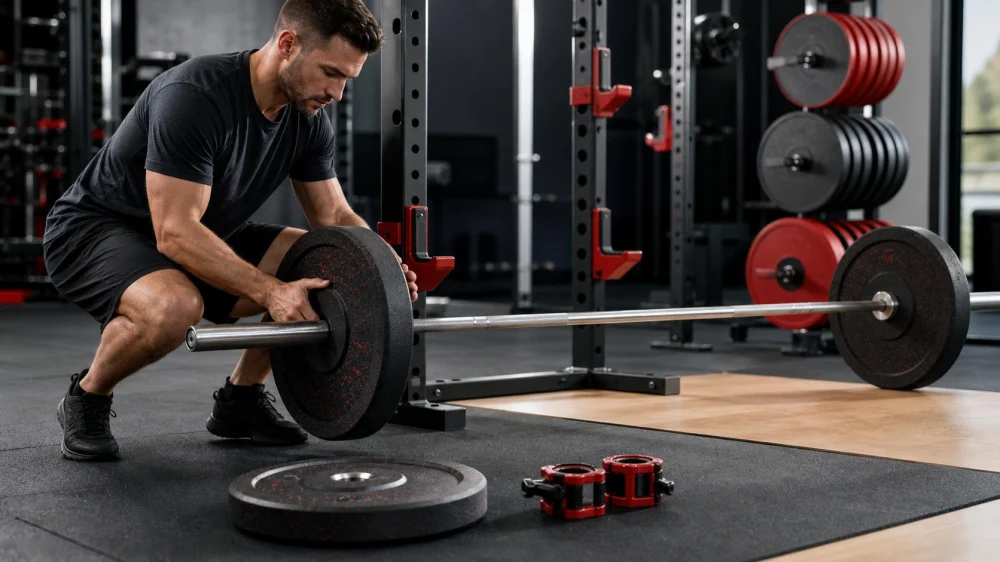
Use the bar, plates, collars, rack, and platform designated by your gym. Load matching weight on alternating sides, push plates fully onto the sleeves, and secure both ends with compatible collars when facility rules or the exercise require them. Before lifting, verify the total, plate order, collar lock, hooks, and safeties. Unload in small, alternating steps so a racked bar cannot tip.

Escalante Multi-Generational Center - Fitness Center / north tempe multi generational center
2150 E Orange St., Tempe, AZ 85281, USA
Inspect the bar, plates, and station
Begin before touching a plate. Confirm that the bar belongs at the rack or platform, is centered on both hooks, and has clear sleeves. Look for a bent shaft, damaged sleeve, loose end cap, sharp edge, cracked plate, broken collar, unstable hook, or visibly loose rack hardware. Report questionable equipment instead of testing it under load.
Clear bottles, phones, spare plates, and bags from the lifting and walking zones. Place the plates you expect to use close enough to reach without carrying them across the bar path, but not where a foot or rolling plate can strike them. Wear closed athletic shoes and use the facility's approved plate trees and storage areas.

Evolution Muay Thai / evolution muay thai nyc
New YorkNew York CountyNew York
213 W 35th St, New York, NY 10001, USA
Match plates and load both sides evenly
- Identify the bar's stated weight and the plates needed for the planned total.
- Check each plate's marked weight; do not assume matching colors mean matching values.
- Add one plate to one sleeve, then place the matching plate on the opposite sleeve.
- Continue alternating sides and keep plates pushed together near the inner sleeve collar.
- Recalculate the total and visually compare both ends before adding collars.
Balanced loading matters even at moderate weights. A large one-sided difference can shift a bar on hooks, change how it unracks, or allow an unattended end to rise. Ask a training partner or staff member to read the plates back when using unfamiliar units or mixed plate styles.
Choose and secure the right collars
Collars reduce plate movement along the sleeves. Common designs include spring clips, clamp or lock collars, and specialized competition collars. Use a matched pair designed for that bar's sleeve diameter; a collar that slides easily before the set is not providing dependable restraint.
Push each collar snugly against the outer plate and fully close its locking mechanism. Give it a light outward check without yanking the bar off center. Install both collars, not just the side that appears to move.
Facility rules differ. Many university fitness centers require collars for all barbell lifts, while equipment-specific instructions or supervised competition practice may call for a particular setup. Follow the current gym policy and manufacturer instructions. Do not improvise with bands, rope, tape, or mismatched clips.
Check the rack and safety setup
Collars do not replace rack safeties or a competent spotter. Set both hooks to the same height and ensure they are fully seated. For an exercise performed inside a rack, place safety arms or pins at a height that can catch the bar without blocking the intended range. Test the empty bar position first.
Stand where you can see both sleeves. Confirm that the bar is centered, the plates are flush, both collars are closed, and no resistance band or attachment is creating an unexpected pull. If you cannot safely unrack, control, and rerack the planned load, reduce it or ask qualified staff for help.
Unload without tipping the bar
Return the bar securely to both hooks and confirm it is stable before removing collars. Strip plates in alternating, modest steps. Avoid leaving several large plates on one side of a racked bar while the other sleeve is empty; the loaded end can outweigh the support and tip or slide.
Use both hands for large plates and keep fingers away from pinch points between plates, sleeves, racks, and storage pegs. Do not roll a plate through a walkway or lean it where it can fall. If someone has left a heavily uneven or unstable bar, keep others back and ask staff to help rather than trying to rescue it alone.
Handle a shared station clearly
When working in with another member, agree on the bar weight, plate changes, collar style, hook height, and safety position. Each lifter should perform their own final check; a partner's setup may not match your height or plan. Say the intended load aloud before the set when multiple people are changing plates.
When finished, remove all plates and collars unless the gym directs otherwise, return each item to its proper rack, and leave the bar centered. An apparently abandoned loaded bar forces the next person to guess whether the station is active and creates unnecessary unloading risk.
Pre-set barbell checklist
- The bar and station are approved for the intended exercise.
- The floor, platform, and bailout area are clear.
- Both ends carry matching plate weight in the same order.
- Plates are fully seated and compatible with the sleeves.
- Both collars match, fit, and are fully locked.
- Hooks and rack safeties are even and secure.
- The total load has been recalculated, including the bar.
- A suitable spotter or other safety plan is in place when needed.
Limits and safety cautions
This article provides general fitness information, not individualized coaching or medical advice. Bar designs, sleeve diameters, plate types, collar requirements, rack capacities, and permitted exercises vary. Facility rules, equipment labels, and manufacturer instructions take priority over general guidance.
Stop if equipment shifts, a collar opens, plates move unexpectedly, the rack is unstable, or you lose control of the load. Do not attempt a personal record merely because the equipment is secured. People new to free weights should learn setup and lifting technique from qualified staff and increase training demands gradually.
Frequently asked questions
Do I need collars for an empty bar?
There are no plates for collars to retain, but follow the facility's policy and store collars where they will not become a trip hazard. Once plates are added, use the required compatible pair.
Can spring clips and lock collars be mixed?
Use a matched pair with equal fit and the correct sleeve size. Mixing types can create different restraint on each side and makes the pre-set check less reliable.
Should the heaviest plate go on first?
Load larger plates toward the inside unless the equipment or program specifies otherwise, then keep the same order on both ends. The priority is a balanced, secure, repeatable setup.
Are collars enough for bench press safety?
No. Collars keep plates from sliding; they do not catch a failed repetition. Use correctly set rack safeties and an appropriate spotter plan, and choose a manageable load.
Evidence and sources
- American College of Sports Medicine: Selecting and Effectively Using Free Weights
- UC Santa Barbara Recreation: Fitness Center Policies
- University of Arkansas Recreation: Fitness Center Policies
- University of Illinois Campus Recreation: Fitness Area Policies
Conclusion and next steps
Make loading the bar a deliberate routine: inspect, alternate matching plates, lock compatible collars, set the rack, and verify the total. Then reverse the process carefully when the set is over. A quiet ten-second check protects the lift, the equipment, and everyone sharing the weight room.


 Club Pilates5.0 (287 reviews)
 DTW Fitness5.0 (11 reviews)
 Yoga Room4.0 (16 reviews)
 Charlevoix Yoga5.0 (11 reviews)
 Power Life Yoga Barre Fitness - South Plaza4.0 (87 reviews)
 Semper FIt Boxing Club5.0 (120 reviews)
 How to Build Race-Specific Strength Workouts That Translate Directly to Faster Finishes This Fall
 The Runner’s Guide to Strengthening Hips and Glutes for Better Performance
 Science-Backed Tips for Improving Your Muscle Gain | Expert Fitness Advice
 Best Glute Activation Exercises Before Leg Day
 Best Exercises to Reduce Back Fat: Effective Workouts for a Toned Back
 Beginner’s Guide to Bodyweight Training for Fitness Success