
- Understanding Progressive Overload
- Why Use Bands and Bodyweight for Progressive Overload?
- How to Implement Progressive Overload with Bands
- How to Implement Progressive Overload with Bodyweight Exercises
- Real-Life Examples of Progressive Overload in Action
Understanding Progressive Overload
Progressive overload is a fundamental principle in strength training. It refers to gradually increasing the resistance, intensity, or volume of your workouts to continue challenging your body and stimulating muscle growth. Whether you're using free weights, resistance bands, or your bodyweight, the principle of progressive overload is crucial for getting stronger and building muscle over time.
To effectively apply progressive overload, you need to continually challenge your muscles by increasing the difficulty of your exercises. This can be done by adding more weight, increasing the number of repetitions, adjusting the tempo of your movements, or reducing rest time between sets. The goal is to ensure that your muscles never adapt fully to the stress placed on them, ensuring continuous progress.

Lourdes Health & Fitness / lourdes gym
Johnson CityBroome CountyNew York
491 Reynolds Rd, Johnson City, NY 13790, USA
Why Use Bands and Bodyweight for Progressive Overload?
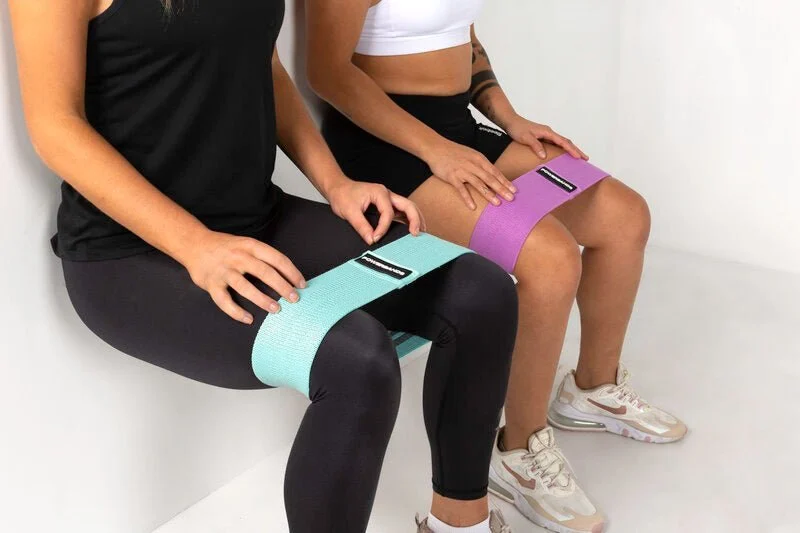
Resistance bands and bodyweight exercises are excellent tools for implementing progressive overload, especially if you're working out at home or don’t have access to heavy gym equipment. Here's why they work so well:
- Portability: Bands and bodyweight exercises are incredibly portable. You can take them anywhere—whether you're at home, outdoors, or traveling—making them perfect for on-the-go strength training.
- Scalability: Bands come in various resistance levels, allowing you to increase the difficulty as you get stronger. Bodyweight exercises, too, can be modified to increase intensity, such as by adding variations or increasing reps.
- Joint-Friendly: Bodyweight exercises and bands provide lower-impact options compared to heavy weights, which makes them a great choice for beginners or those recovering from injuries.
- Full-Body Engagement: Both bands and bodyweight exercises can engage multiple muscle groups simultaneously, offering a functional workout that promotes overall strength and balance.
How to Implement Progressive Overload with Bands
Resistance bands are one of the most versatile tools for progressive overload. Here's how you can use bands to progressively increase the difficulty of your workouts:
- Increase Band Resistance: The easiest way to implement progressive overload with bands is to use bands with greater resistance. Bands come in varying levels of resistance (light, medium, heavy), so swapping to a stronger band will increase the difficulty of your exercises.
- Increase Repetitions: Gradually increase the number of reps you do for each exercise. For example, if you're doing 12 reps of a band squat, aim to increase to 15 reps in the following weeks.
- Slow Down the Tempo: By slowing down the movement of your exercises, especially during the eccentric (lowering) phase, you create more time under tension for your muscles, increasing the intensity without needing to change the band resistance.
- Combine Multiple Bands: You can also combine multiple bands for extra resistance. By adding another band to the movement, you create greater difficulty and challenge the muscles in a new way.
How to Implement Progressive Overload with Bodyweight Exercises
Bodyweight exercises are a great way to build strength, especially when you don’t have access to weights. Here’s how you can progressively overload your bodyweight exercises:
- Increase Reps or Sets: One of the simplest ways to apply progressive overload is by increasing the number of repetitions or sets. If you're performing bodyweight squats, start by doing 10 reps per set, and as you get stronger, increase it to 20 reps or add another set.
- Modify the Exercise for Greater Intensity: You can make bodyweight exercises harder by changing their variation. For example, try elevating your feet for push-ups or performing single-leg squats to increase difficulty.
- Reduce Rest Time: Shortening the rest time between sets forces your muscles to work harder and increases the intensity of your workout, promoting greater muscle endurance and strength.
- Incorporate Advanced Techniques: Once you're comfortable with basic bodyweight movements, try adding advanced techniques like explosive movements (jump squats or burpees), isometric holds (planks), or circuit training for added intensity.
Real-Life Examples of Progressive Overload in Action
Consider the case of John, an avid runner who wanted to improve his overall strength without going to the gym. He started incorporating resistance bands into his routine for exercises like squats and lunges. At first, he used a light band, but after a few weeks, he swapped to a heavier band and increased his reps. He also began using slower tempos for certain movements like deadlifts to increase muscle engagement.
Within three months, John noticed significant improvements in his leg strength and muscle tone, which translated into better running performance. His experience is a great example of how you can use bands for progressive overload to achieve real strength gains outside the traditional gym setting.
Another example comes from Jessica, who wanted to improve her upper body strength. She started doing push-ups, initially with regular reps, but gradually switched to more challenging variations like decline push-ups and archer push-ups. By increasing the reps and modifying the exercise, she was able to continuously challenge herself and build strength over time.
These examples show that with consistency and the right application of progressive overload, both bands and bodyweight exercises can lead to significant strength gains, no matter where you’re training.




 Diana Pilates5.0 (13 reviews)
 Orangetheory Fitness4.0 (184 reviews)
 Core Pilates Centennial Hills4.0 (47 reviews)
 The Sporting Club at The Bellevue3.0 (133 reviews)
 Prenatal Yoga0.0 (0 reviews)
 Planet Fitness4.0 (753 reviews)
 Best Foods to Eat Before and After Home Workout for Optimal Performance
 The Ultimate Gym Routine for Maximum Results
 The Ultimate CrossFit Routine: Build Strength, Endurance, and Flexibility
 The Benefits of Daily Yoga – Why You Should Practice Yoga Every Day
 Advanced Techniques for Better CrossFit Results
 How to Incorporate Tempo Runs Into Your Busy Schedule This Fall