- 1. Introduction to Kettlebell Training
- 2. Mastering the Kettlebell Swing
- 3. Goblet Squats: A Fundamental Exercise
- 4. Kettlebell Progressions for Beginners
- 5. Training Tips for Successful Kettlebell Workouts
1. Introduction to Kettlebell Training
When it comes to functional fitness, few tools are as versatile and effective as the kettlebell. This compact piece of equipment can help you build strength, endurance, and mobility. Unlike traditional weights, kettlebells are designed to engage multiple muscle groups at once, making them a great addition to any fitness routine.
If you’re a beginner, kettlebell training might seem intimidating at first. But with the right approach, it can quickly become one of the most rewarding forms of exercise. In this guide, we’ll break down some of the essential kettlebell exercises, including swings, goblet squats, and progressions, to help you get started on your fitness journey.
FLX FLO Pilates - Red Bank / flx flo pilates
Red BankMonmouth CountyNew Jersey
170 Monmouth St, Red Bank, NJ 07701, USA
2. Mastering the Kettlebell Swing
The kettlebell swing is often regarded as one of the most fundamental exercises in kettlebell training. It's a powerful movement that targets the posterior chain—the muscles along your back, glutes, and hamstrings—while also engaging your core and shoulders. Here’s how to perform the kettlebell swing properly:
- Start with your feet shoulder-width apart: Place the kettlebell on the floor in front of you and squat down to grab the handle with both hands.
- Hinge at your hips: Push your hips back as if you're closing a car door with your hips. Keep your chest up and your back flat, not rounded.
- Swing the kettlebell: Drive through your hips, pushing your hips forward and allowing the kettlebell to swing upward. The power should come from your hips, not your arms.
- Control the descent: Let the kettlebell swing back down between your legs, ensuring you maintain control. Keep your core engaged throughout the movement.
For beginners, start with a light kettlebell to focus on form. As you become more comfortable, you can increase the weight and intensity of your swings.

Arsen's Gym | 24/7 Orange Ct / arsens gym stamford
OrangeSouth Central Connecticut Planning RegionConnecticut
385 Boston Post Rd, Orange, CT 06477, USA
3. Goblet Squats: A Fundamental Exercise
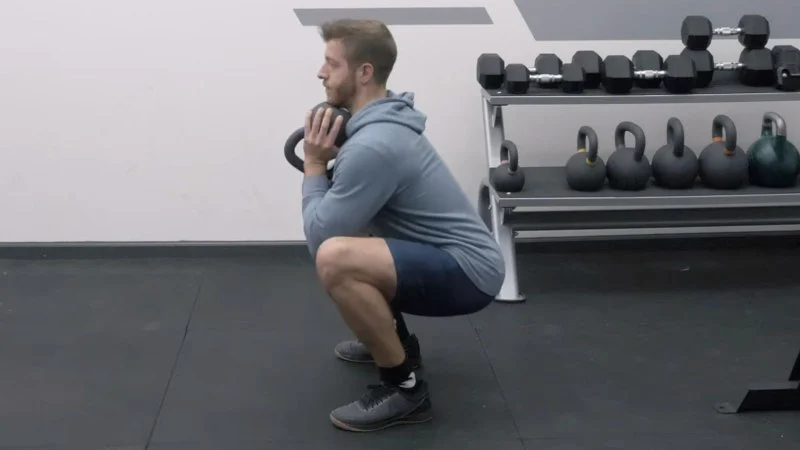
Another essential kettlebell exercise for beginners is the goblet squat. This movement helps improve lower body strength, mobility, and stability while also engaging your core. Here's how to do it:
- Hold the kettlebell at chest height: Grip the kettlebell with both hands, keeping your elbows close to your body, and hold it close to your chest.
- Stand with your feet shoulder-width apart: Your toes should point slightly outward, and your knees should track in the same direction as your toes.
- Lower into the squat: Push your hips back and bend your knees to lower your body down into a squat position. Keep your chest up and your back straight.
- Return to standing: Drive through your heels and push your hips forward to return to the standing position.
The goblet squat is a fantastic exercise for beginners because it helps reinforce good squat mechanics and engages multiple muscle groups, including the glutes, quads, and core.
4. Kettlebell Progressions for Beginners
Progressions are important when learning any new exercise, and kettlebell training is no different. It’s essential to build a solid foundation with basic exercises before moving on to more advanced variations. Here are some helpful progressions to follow:
- Start with basic swings: Begin with the two-handed kettlebell swing and focus on mastering the form and rhythm.
- Move on to single-arm swings: Once you're comfortable with two-handed swings, try the single-arm swing. This progression helps build unilateral strength and improves coordination.
- Progress to double kettlebell exercises: For more advanced kettlebell training, try exercises that involve holding two kettlebells, like the double kettlebell swing or double kettlebell goblet squat.
- Add more complex movements: As your strength and technique improve, you can start incorporating more advanced movements like kettlebell snatches, cleans, and presses.
As you progress, always focus on form and technique. It’s better to perform fewer reps with perfect form than to rush through more reps with poor technique.
5. Training Tips for Successful Kettlebell Workouts
To get the most out of your kettlebell workouts, consider these helpful tips:
- Warm-up properly: Spend 5-10 minutes warming up your muscles before starting your kettlebell workout. This can include dynamic stretches and light cardio.
- Start with lighter weights: If you're new to kettlebell training, begin with a lighter kettlebell to focus on form before increasing the weight.
- Incorporate variety: Mix up your workouts by alternating between different kettlebell exercises to keep things interesting and avoid plateauing.
- Rest and recover: Allow your body time to recover between workouts. Kettlebell training can be intense, so ensure you're getting enough rest.
- Focus on your core: Kettlebell training engages the core, so always keep it tight and activated during every movement.
By following these tips and sticking with a consistent training schedule, you'll be well on your way to mastering kettlebell exercises and seeing results in your strength, endurance, and overall fitness.



 BVL Boxing Solutions5.0 (19 reviews)
 Max Effort Strength and Conditioning4.0 (41 reviews)
 Scranton Pilates5.0 (12 reviews)
 Strength Haven Athletics4.0 (51 reviews)
 Center for Health & Fitness4.0 (14 reviews)
 Private Pilates Sessions with Onqpilates5.0 (3 reviews)
 How To Use a Training Log Effectively: What to Track, Why, and How to Act on It
 Beginner's Guide to CrossFit: Your Essential Start to Fitness
 10 Mistakes to Avoid in Home Workouts - Achieve Better Results at Home
 How to Periodize Your Strength and Running Work for Consistent Off-Season Progress
 How to Balance High-Intensity Workouts with Quality Sleep and Nutrition During Busy Fall Months
 How to Use Heart Rate Zones for Smarter Fall Training and Race Prep